Key facts
- You visit the Great Cavern with Route 3-C of the Royalty circuit: 3 km round trip and high effort.
- The official map sets a maximum of 7 hours; at a normal pace, the visit takes 3 h 30 min to 4 h 30 min.
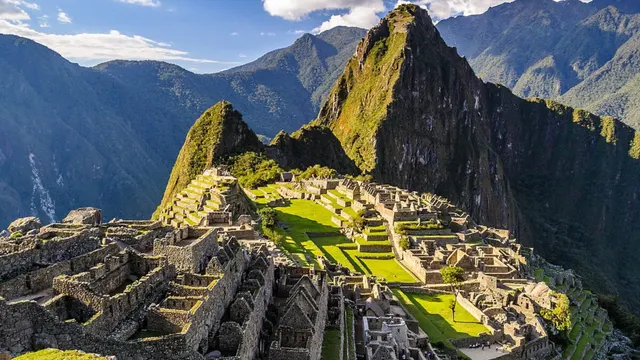
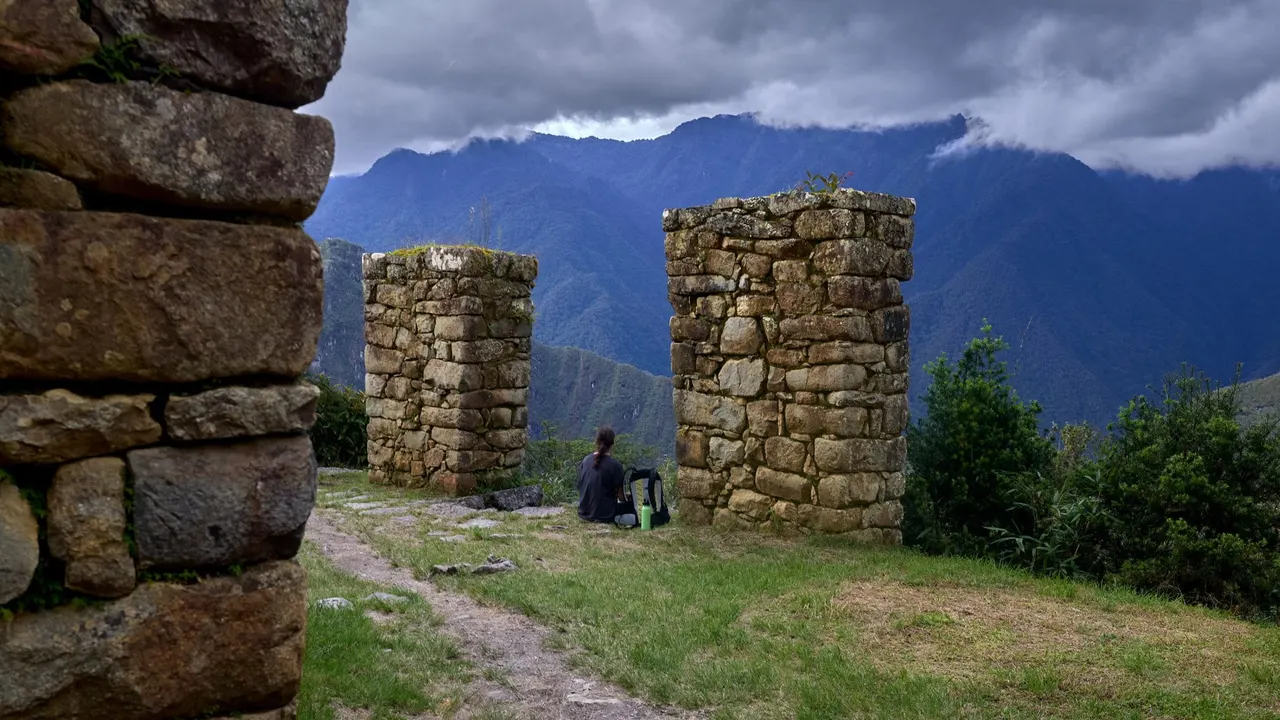
- It includes the royal sector: Temple of the Sun, House of the Inca, ceremonial fountains, Three Doorways and Temple of the Condor.
- The trail goes down through the forest from the Sacred Rock, and the climb back is the toughest stretch.
- “Temple of the Moon” is a popular name with no archaeological basis; the official route is called Great Cavern.
- It’s only sold in peak season.
In this guide
The Great Cavern, popularly known as the Temple of the Moon, is a cave with fine Inca stonework on the slopes of Huayna Picchu. You visit it with a ticket for Route 3-C of the Royalty circuit: about 3 km round trip, high effort and a maximum of 7 hours inside the sanctuary. It also includes the royal sector of the citadel. It’s only sold in peak season.
Route 3-C at a Glance
| Detail | Route 3-C: Great Cavern |
|---|---|
| Circuit | 3 – Machu Picchu Royalty |
| Round-trip distance | About 3 km |
| Official effort level | High |
| Maximum time allowed | 7 hours, according to the official route map |
| Season | Peak season only |
| Trailhead | The checkpoint next to the Sacred Rock, the same one you go through to reach Huayna Picchu |
| What’s included | Terraces, close-up classic photo, Temple of the Sun, House of the Inca, ceremonial fountains, Three Doorways, Great Cavern and Temple of the Condor |
| Type of trail | Stone steps through humid forest: first it goes down, and then you have to climb back up |
Distance, effort and included sites from the official Tu Boleto platform; time allowed and route layout from the Ministry of Culture’s official map of Route 3-C.
What Is the Great Cavern?
It’s a natural cave on the slopes of Huayna Picchu, below the point where the trail begins. Inside, the Incas built walls of finely worked stone and carved niches, with masonry as careful as what you’ll see in the temples of the royal sector.
Its exact purpose isn’t known for certain. What you do notice when you get there is how set apart it is from the rest of the city: you have to make a detour and go down on purpose, and it can’t be seen from the citadel.
Why Is It Called the Temple of the Moon?
It’s a modern name. There’s no archaeological evidence that the site was dedicated to the moon, but the name caught on among guides and travelers. The Ministry of Culture uses the name Great Cavern (Gran Caverna), and that’s how the route appears on the ticketing platform. If you search for “Temple of the Moon” when buying, you won’t find it.
The Route, Step by Step
Route 3-C combines the royalty circuit with a hike along the mountainside. This is the approximate order according to the official platform and the route map:
- Entry and terraces. You go in through the main entrance and make your way along the terraces toward the urban sector, with a stop at a close-up classic photo spot.
- Royal sector. You tour the Temple of the Sun, the House of the Inca and the ceremonial fountains, the spaces of the Inca elite.
- Three Doorways and Sacred Rock. You reach the northern end of the citadel, where the checkpoint is. They check your ticket there before you head out onto the trail.
- Descent through the forest. The path wraps around the base of Huayna Picchu and goes down stone steps through dense vegetation. It’s humid and shaded.
- Great Cavern. Time to see the walls, the niches and the surroundings. There are usually few people.
- Climb back. You return along the same trail to the Sacred Rock. It’s the toughest stretch: everything you went down, you now have to climb back up.
- Temple of the Condor and exit. Back in the citadel, you pass the Temple of the Condor and leave through the main entrance.
Important: if your ticket shows a time for the Sacred Rock checkpoint, treat it as fixed. There’s no grace period at the mountain checkpoints in this sector, and it’s better to arrive with time to spare than to argue at the checkpoint.
Why Is It High Effort If It Doesn’t Climb a Summit?
Many travelers choose the Great Cavern thinking it’s a stroll, because it doesn’t top out on any mountain. It isn’t. The Ministry of Culture rates it high effort, the same as Huayna Picchu, for three reasons:
- The elevation change is reversed: you start by going down, with fresh legs, and the climb comes when you’ve already been walking for quite a while.
- Uneven steps: they’re made of stone, tall in some sections and slippery with the forest humidity.
- Humid heat: the trail is on a high-jungle mountainside and, by mid-morning, you sweat a lot even in the shade.
On the plus side, it doesn’t have the vertical, cable-assisted passages of the Huayna Picchu summit or the sense of exposure of its final sections.
How Much Time to Plan For
The official limit is 7 hours, the most generous on Circuit 3, so time won’t be an issue. This is our estimate at a normal pace with a guide:
| Stage | Approximate time |
|---|---|
| Terraces and royal sector, up to the Sacred Rock | 1 h to 1 h 30 min |
| Descent to the Great Cavern | 45 min to 1 h |
| Visit to the cavern | 15 to 20 min |
| Climb back to the Sacred Rock | 1 h to 1 h 15 min |
| Temple of the Condor and exit | 20 to 30 min |
| Total | 3 h 30 min to 4 h 30 min |
Outside the sanctuary, add the bus ride back down to Aguas Calientes, 25 to 30 minutes, plus the line. With this route, we don’t recommend catching an early-afternoon return train: leave yourself some leeway.
Tip: choose one of the first time slots. You’ll reach the climb back before the worst of the heat, and the forest along the trail is more enjoyable in the low morning light.
Great Cavern, Huayna Picchu or Huchuy Picchu
The Circuit 3 routes share the royal sector and differ in the hike. If you’re torn between them, this table helps:
| Route | Round-trip distance | Effort | Max. time | Season | What it offers |
|---|---|---|---|---|---|
| 3-A Huayna Picchu | 2.4 km | High | 6 h | Year-round | The summit from the classic photo, with exposed sections and cables |
| 3-B Designed Royalty | 1.3 km | Moderate | 2 h 30 min | Year-round | Only the royal sector, with no extra hike |
| 3-C Great Cavern | 3 km | High | 7 h | Peak season | Forest, rarely visited archaeology and no vertigo |
| 3-D Huchuy Picchu | 1.7 km | Moderate | 3 h 30 min | Peak season | A low summit overlooking the citadel |
- Choose the Great Cavern if you’re more interested in archaeology than in the photo from a summit, you’re looking for peace and quiet, or you have a fear of heights but strong legs.
- Choose Huayna Picchu if you want the mountain from the classic photo and steep stairs don’t scare you.
- Choose Huchuy Picchu if you want an elevated view with little effort, for example with kids.
To see all ten routes with their distances, check Machu Picchu circuits: all 10 routes explained.
How to Get a Ticket for Route 3-C
It’s bought like any other route: on the official Tu Boleto platform, through an agency or at the ticket office in Machu Picchu Pueblo for the following day. Keep the following in mind:
- It only goes on sale on the peak-season dates set by the Ministry of Culture. If the route doesn’t show up for your date, it isn’t being sold that day.
- Look for the official name, “Gran Caverna” (Great Cavern), within Circuit 3.
- The ticket is issued in your name: register the same passport or document you’ll be bringing to the entrance.
- Since the trail starts at the same checkpoint as Huayna Picchu, maintenance closures in that area can affect you. In 2026, Waynapicchu had a month of conservation work and reopened on July 1, and in that announcement the Ministry listed the route to the Great Cavern among the options on the circuit.
The step-by-step buying process, entry times and the grace period at the main entrance are in our guide to Machu Picchu tickets. Rates for each visitor category are in Machu Picchu ticket types.
Tips for the Hike
- Lightweight hiking shoes: with soles that grip on wet stone. Trekking poles aren’t allowed.
- Plenty of water: at least a liter per person. Nothing is sold inside the sanctuary.
- Insect repellent: the forest trail has mosquitoes, especially in the wetter months.
- A light rain jacket: on the slopes of Huayna Picchu, rain can show up at any time of year.
- Use the restroom before you go in: the facilities are next to the entrance, outside the route, and the route is long.
- A small backpack: the maximum is 40 × 35 × 20 cm. Check the list of banned items in what not to bring to Machu Picchu.
Bottom Line: What to Do Based on Your Trip
- You want the royal sector and a hike without vertigo: Route 3-C is your route, in an early time slot. It fits best if you spend the night before in Aguas Calientes.
- You want the photo from the summit: go for Huayna Picchu or, if you’d prefer something gentler, Huchuy Picchu. Compare the two big ones in Huayna Picchu vs. Machu Picchu Mountain.
- You’re doing a day trip from Cusco: with a 4-hour route plus the train and bus, the day gets tight. If you’re going and coming back by train on the same day, a shorter route is the better choice.
- You’re traveling outside peak season: Route 3-C isn’t sold. Route 3-B takes you through the same royal sector without the hike.
- You have bad knees: going down and back up tall steps takes its toll. Route 3-B or 3-D is a better choice.
If you still don’t know how you’ll get to the sanctuary, start with how to get to Machu Picchu from Cusco and choose your route afterward.
Frequently asked questions
Is the Great Cavern the same as the Temple of the Moon?
Yes. “Temple of the Moon” is the popular name; on the official platform the route appears as Great Cavern (Gran Caverna), within Circuit 3.
Is Route 3-C hard?
The Ministry of Culture rates it high effort. It doesn’t climb to a summit, but it goes down stone steps and makes you climb them back up, in humid heat.
How long does the Great Cavern visit take?
Between 3 h 30 min and 4 h 30 min at a normal pace, including the royal sector. The official limit is 7 hours.
Do you have to climb Huayna Picchu to reach the Great Cavern?
No. The trail starts at the same checkpoint next to the Sacred Rock, but it wraps around the mountainside and doesn’t climb to the summit.
Is the Great Cavern trail scary if you’re afraid of heights?
Much less so than Huayna Picchu: it’s a forest path, without the vertical, cable-assisted passages of the summit.
Which is better, the Great Cavern or Huchuy Picchu?
Huchuy Picchu is shorter and moderate effort, with an elevated view of the citadel. The Great Cavern is more demanding and offers rarely visited archaeology instead of a summit.
Is the Great Cavern route open year-round?
No. It’s only sold in peak season. Outside those dates, Route 3-B covers the same royal sector without the hike.
Official sources
- Tu Boleto (Ministry of Culture): official route descriptions tuboleto.cultura.pe
- Ministry of Culture: circuits and visiting routes machupicchu.gob.pe
- Ministry of Culture: entry times and grace periods machupicchu.gob.pe · PDF · Download the original PDF

How we put this guide together
Written by Paul Pumalloclla · 17 years in tourism
- Official sources Prices, opening hours and rules checked against Peru’s Ministry of Culture, SERNANP, PromPerú and the train and bus operators.
- Sources cited Every guide links to the sources we used at the end.
- Always up to date When a rule changes, we update the guide and its date.
We’re not a travel agency: we don’t sell tours or take bookings. If a link belongs to a commercial partner, we label it next to the link, and that never changes the facts or the recommendations.
Guide history
- Published
- Last reviewed
Spotted something out of date?
Let us know and we’ll check it against the official source.
Report a change