Key facts
- You visit Intipunku with Route 1-C of the Panoramic circuit: 3.4 km round trip and moderate effort.
- The official map sets a maximum time of 4 hours; at a normal pace, the visit takes about 3 hours.
- The route includes the upper terraces and the classic photo, but not the urban sector or the temples.
- It’s only sold in peak season: if it doesn’t appear on Tu Boleto for your date, it isn’t offered that day.
- If you arrive on the 4-day or 2-day Inca Trail, you already pass through Intipunku and don’t need Route 1-C.
In this guide
Intipunku, the Sun Gate, is the stone gateway through which the Inca Trail enters Machu Picchu. Without doing the trek, you can reach it from the citadel with a ticket for Route 1-C of the Panoramic circuit: about 3.4 km round trip, moderate effort and a maximum of 4 hours inside the sanctuary. It’s only sold in peak season.
Route 1-C at a Glance
| Detail | Route 1-C: Intipunku Gate |
|---|---|
| Circuit | 1 – Panoramic |
| Round-trip distance | About 3.4 km |
| Official effort level | Moderate |
| Maximum time allowed | 4 hours, according to the official route map |
| Season | Peak season only |
| Elevation of the gate | About 2,720 m, roughly 300 m above the citadel (2,430 m) |
| What’s included | Lower and upper platforms of the agricultural sector, the high viewpoint with the classic view and the last stretch of the Inca Trail up to the gate |
| What’s not included | The urban sector: no temples, main plaza or Sacred Rock |
Distance and effort from the official Tu Boleto platform; time allowed and route layout from the Ministry of Culture’s official map of Route 1-C.
What Is Intipunku?
In Quechua, inti means sun and punku means door. The gateway sits in the mountain pass that separates the citadel from the rest of the Inca Trail, on the slopes of Machu Picchu Mountain. It’s a set of stone walls and openings that controlled the passage of anyone arriving along the main road from the valley.
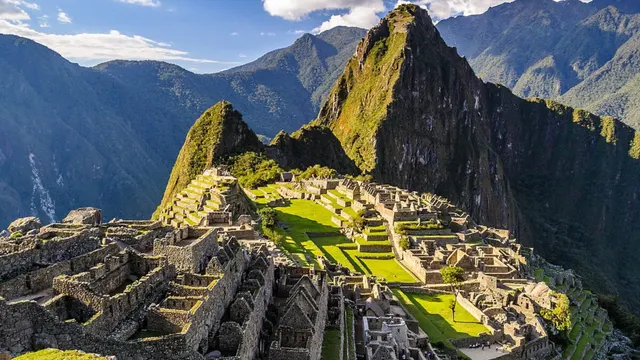
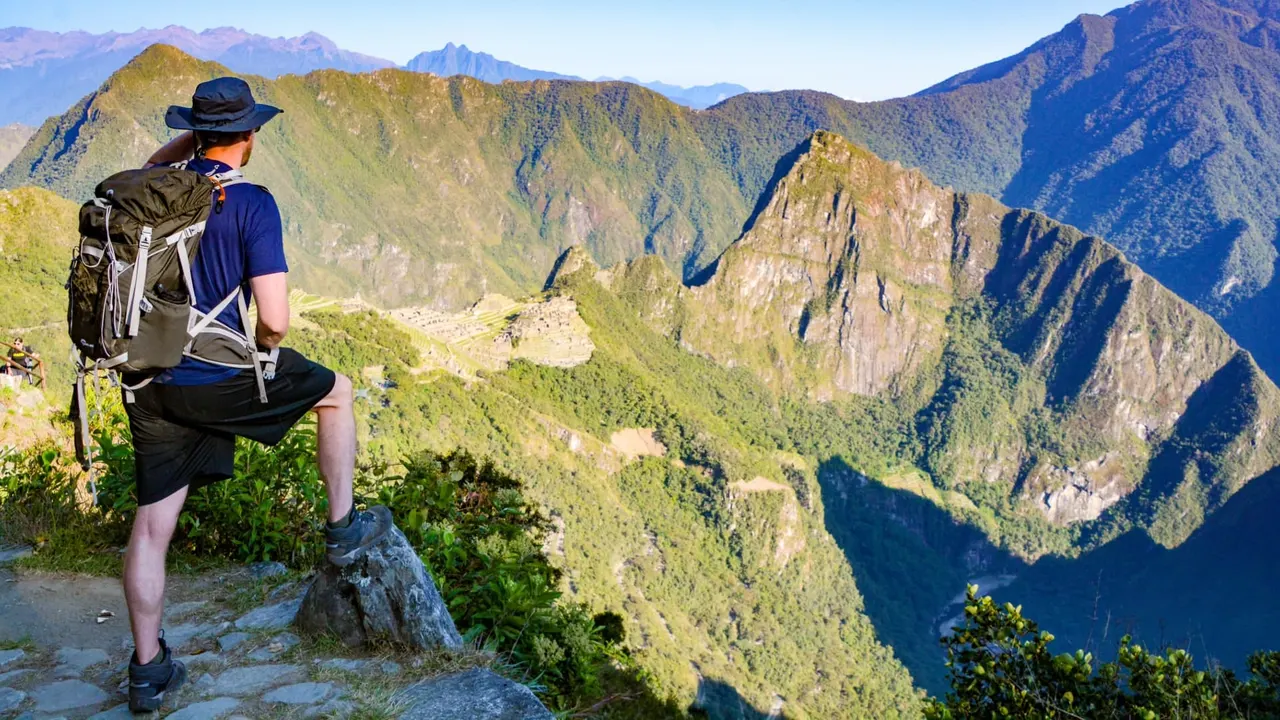
From there you see the entire Inca city for the first time, with Huayna Picchu in the background. It’s the view that hikers on the Inca Trail wait for after days on the trail. You’ll get it in reverse: you climb up from the citadel and look back.
The Route, Step by Step
Route 1-C starts the same way as Route 1-B, the Upper Terrace route, and adds the hike up to the gate. According to the official map, the order is as follows:
- Entry and climb up the terraces. From the main entrance, you climb zigzagging stairs to the upper section of the agricultural sector.
- Lower and upper platforms. You pass the upper terraces, with areas where your guide can give explanations, and the viewpoint for the classic photo of Machu Picchu.
- Checkpoint. At the edge of the terraces, the Inca Trail path begins. Your ticket is checked there.
- Climb to Intipunku. The path is paved with stone, with stretches of steps and a steady but moderate incline. It runs along the mountainside, with views of the Vilcanota Valley.
- The gate. Time to rest, take in the citadel from above and take photos.
- Return. You head back down the same trail to the terraces and leave through the main entrance. There’s no connection to the urban sector.
The stretch up to the gate has no exposed passages like those on Huayna Picchu. It’s a sustained climb, more long than difficult.
How Much Time to Plan For
The Ministry sets the limit at 4 hours from the moment you enter. At a normal pace, with a guide and photo stops, that leaves plenty of leeway. This is our estimate based on years of experience in Cusco:
| Stage | Approximate time |
|---|---|
| Entry, terraces and the classic photo viewpoint | 45 min to 1 h |
| Climb from the checkpoint to Intipunku | 50 min to 1 h 15 min |
| Rest at the gate | 15 to 30 min |
| Descent to the exit | 40 min to 1 h |
| Total | About 3 hours |
Remember to add, outside the sanctuary, the bus ride back down to Aguas Calientes, 25 to 30 minutes, plus the line. With a morning ticket, you can catch an early-afternoon train back without rushing.
Tip: choose an early time slot. The climb to Intipunku is in the sun for almost the entire way, and the humidity really kicks in from midday. In the early hours, you’ll also often get to watch the mist lift off the citadel.
Intipunku and the Inca Trail: Do You Need Route 1-C?
It depends on how you get to Machu Picchu. Some routes already pass through the Sun Gate and others don’t:
| How you arrive | Do you pass through Intipunku? | Is Route 1-C worth it for you? |
|---|---|---|
| Classic 4-day Inca Trail | Yes, on the last day, before sunrise | You don’t need it |
| Short 2-day Inca Trail | Yes, in the afternoon, after passing Wiñay Wayna | You don’t need it |
| Train to Aguas Calientes | No | Yes, if you want to set foot on the Inca Trail |
| Salkantay, Inca Jungle or Hidroeléctrica | No: they end in Aguas Calientes | Yes, as the finishing touch to your trek |
If you arrive on the 4-day Classic Inca Trail or the 2-day Short Inca Trail (both covered in our Inca Trail guide), the gate is part of your route and your visit to the citadel is arranged separately. For everyone else, Route 1-C is the only way to walk a stretch of the Inca Trail without a trekking permit. If you’re torn between treks, compare them in our comparison of treks to Machu Picchu.
Can You See the Sunrise at Intipunku?
With Route 1-C, it’s very difficult. The first entry time slot is at 6:00 a.m., and from the entrance you still have more than an hour and a half of terraces and climbing ahead of you. In practice, sunrise at the gate is for the 4-day Inca Trail. What you do get with the first time slot is low-angle light, fewer people on the trail and mild temperatures.
Route 1-C, 1-B or Machu Picchu Mountain: Which to Choose
All three routes belong to the Panoramic circuit and share the same start on the upper terraces. What changes is the extra hike:
- Route 1-B (Upper Terrace): the classic photo with no extra effort. It’s the option if you’re short on time or traveling with young children.
- Route 1-C (Intipunku): the classic photo plus a historic stretch of the Inca Trail, with a moderate climb. The middle ground between a stroll and a mountain.
- Route 1-A (Machu Picchu Mountain): 3.8 km of high effort, up to 7 hours and the widest view of the sanctuary and the snowcapped peaks.
- Route 1-D (Inca Bridge): shorter and almost flat, although it runs along a cliff.
None of the Circuit 1 routes cover the temples. If it’s your first visit and you want to see the urban sector, you’ll also need a ticket for Circuit 2 or 3, usually in another time slot or on another day. The full list, with distances, is in Machu Picchu circuits: all 10 routes explained.
How to Get a Ticket for Route 1-C
Route 1-C is bought like any other route: on the official Tu Boleto platform, through an agency or at the ticket office in Machu Picchu Pueblo for the following day. What sets it apart is the calendar:
- It only goes on sale on the peak-season dates set by the Ministry of Culture. If you search for your date and the route doesn’t show up, it isn’t being sold that day.
- It usually sells out later than Huayna Picchu, but the first morning time slots go first. In peak season, buy it weeks in advance.
- Since the ticket is issued in your name, register the same passport or document you’ll be carrying.
The step-by-step buying process, entry times and the grace period at the entrance are in our guide to Machu Picchu tickets. To find out which rate applies to you, check the ticket types by visitor category.
Important: the Dirección Desconcentrada de Cultura de Cusco (the Ministry of Culture’s Cusco office) can close a route for a few days due to construction work or rain and send visitors to another one. For example, in September 2026 it closed Route 1-D to the Inca Bridge and automatically moved its visitors to Route 1-C. Check the official notices during the week of your visit.
Tips for the Hike
- Water and sunscreen: nothing is sold inside the sanctuary, and the trail has little shade.
- Shoes with good grip: the stone steps get slippery with morning humidity or rain. Trekking poles aren’t allowed.
- Layers: you start out cool and work up a sweat on the climb. Bring a light rain jacket, even in the dry season.
- Use the restroom before you go in: the facilities are next to the entrance, outside the route. There are none along the way.
- A small backpack: the maximum is 40 × 35 × 20 cm. Go over the list of banned items in what not to bring to Machu Picchu.
- Altitude: Intipunku is lower than Cusco, but if you fly straight into Cusco, allow one or two days to adjust. More in altitude sickness in Cusco.
Tip: if you want to do Route 1-C in an early time slot and then see the temples on another ticket, spend the night before in Aguas Calientes. That way you won’t depend on the first train from the Sacred Valley.
Bottom Line: What to Do Based on Your Trip
- You’re arriving on the Inca Trail: don’t buy Route 1-C; you already pass through Intipunku. For your visit, choose a route on Circuit 2 or 3.
- You’re arriving by train and want to hike a little: Route 1-C in the first time slot gives you the best balance of effort and reward. It works best on a two-day trip, with a night in town.
- You want the widest view and you’re in good shape: go for Machu Picchu Mountain instead, available year-round.
- You’re traveling outside peak season: Route 1-C isn’t sold. The closest alternative is Route 1-B or the mountain.
- You only have one day and it’s your first visit: prioritize the temples with a classic route on Circuit 2 or 3. Route 1-C doesn’t enter the urban sector.
If you’re still not sure how you’ll get to the sanctuary, start with how to get to Machu Picchu from Cusco and then choose your route.
Frequently asked questions
Can you go to Intipunku without hiking the Inca Trail?
Yes. With a ticket for Route 1-C of the Panoramic circuit, you climb from the citadel up to the gate and come back down the same trail, with no trekking permit.
How long does it take to hike to Intipunku from Machu Picchu?
From the checkpoint on the terraces, between 50 minutes and a little over an hour to climb. With the entry, stops and the descent, plan on about 3 hours in total.
Is the hike to the Sun Gate hard?
The Ministry of Culture rates it moderate effort. It’s a steady climb on a stone-paved path, with no exposed sections or cables.
How long can I stay on Route 1-C?
The official route map sets a maximum of 4 hours inside the sanctuary.
Does the Intipunku route include the temples of Machu Picchu?
No. It passes the upper terraces and the classic photo viewpoint, but it doesn’t enter the urban sector. For the temples you need a ticket for Circuit 2 or 3.
Can you see the sunrise at Intipunku with a Route 1-C ticket?
It’s very difficult: the first entry time slot is at 6:00 a.m. and the climb takes more than an hour and a half from the entrance. Sunrise at the gate is really for the 4-day Inca Trail.
Is Route 1-C open year-round?
No. It’s only sold on the peak-season dates set by the Ministry of Culture. Outside those dates, the closest alternative is Route 1-B or Machu Picchu Mountain.
Official sources
- Tu Boleto (Ministry of Culture): official route descriptions tuboleto.cultura.pe
- Ministry of Culture: circuits and visiting routes machupicchu.gob.pe
- Ministry of Culture: entry times and grace periods machupicchu.gob.pe · PDF · Download the original PDF
- Ministry of Culture: Machu Picchu code of conduct machupicchu.gob.pe

How we put this guide together
Written by Paul Pumalloclla · 17 years in tourism
- Official sources Prices, opening hours and rules checked against Peru’s Ministry of Culture, SERNANP, PromPerú and the train and bus operators.
- Sources cited Every guide links to the sources we used at the end.
- Always up to date When a rule changes, we update the guide and its date.
We’re not a travel agency: we don’t sell tours or take bookings. If a link belongs to a commercial partner, we label it next to the link, and that never changes the facts or the recommendations.
Guide history
- Published
- Last reviewed
Spotted something out of date?
Let us know and we’ll check it against the official source.
Report a change