Key facts
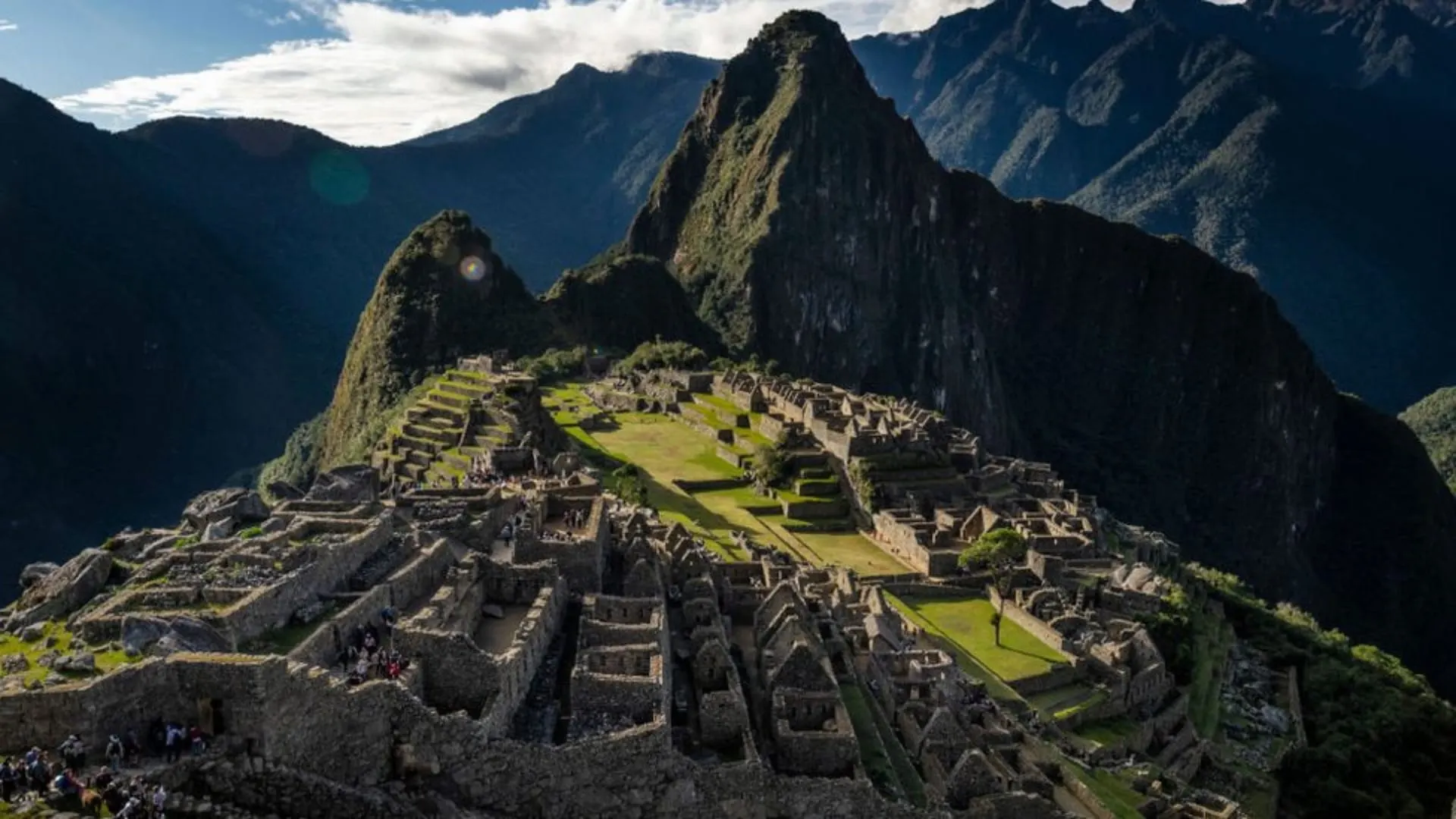
- Huayna Picchu (Wayna Picchu or Waynapicchu) is the “young mountain” that closes off the Inca city to the north, with Inca terraces and rooms on its summit.
- It’s inside the Machupicchu Historic Sanctuary; the trail starts at the checkpoint next to the Sacred Rock.
- Its summit sits at about 2,720 m, almost 300 m above the citadel.
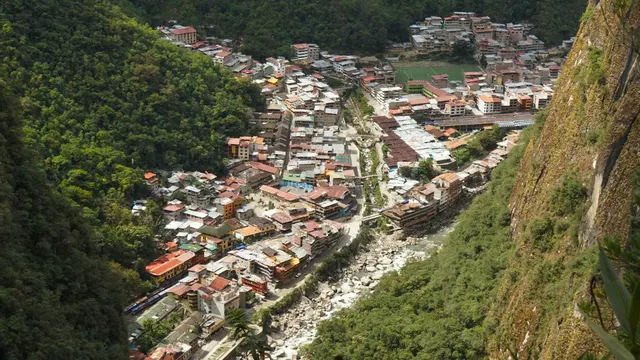
- You reach it by entering Machu Picchu: train or trek to Aguas Calientes and the bus to the main gate.
- You climb it on Route 3-A of the Royalty circuit: 2.4 km round trip, high effort, a 6-hour maximum stay and no grace period at the checkpoint.
- It has only two entry times (7:00 a.m. and 10:00 a.m. in November 2026) and very few spots: buy your ticket as soon as you have dates.
Machu Picchu ticket availability
Seats per route and per day from the official sale. Choose a route to see which dates are still open.
- 1-A · Machupicchu Mountain: Nov 14 (51 seats), Nov 15 (79 seats), Nov 16 (138 seats), Nov 17 (86 seats)
- 1-B · Upper terrace: Nov 27 (37 seats), Nov 28 (125 seats), Nov 29 (89 seats), Nov 30 (513 seats)
- 2-A · Classic Circuit 2: no recent readings
- 2-B · Lower terrace: no recent readings
- 3-A · Huayna Picchu: Nov 30 (75 seats), Dec 1 (188 seats), Dec 2 (235 seats), Dec 3 (250 seats)
Reference seats from the official sale, updated every 30 minutes. They can change within minutes: always confirm on the official site before you buy.
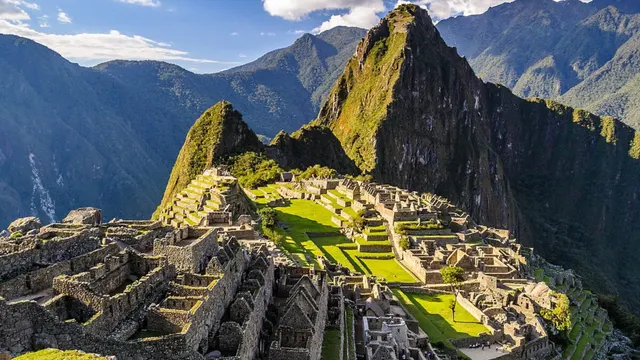
Buy on the official siteHuayna Picchu (also spelled Wayna Picchu or Waynapicchu) is the pointed mountain that rises behind the Inca city in the classic Machu Picchu photo. Its summit sits at about 2,720 m, some 290 m above the citadel, and you climb it with a ticket for Route 3-A of the Royalty circuit: 2.4 km round trip on very steep Inca stairs, with a high level of effort and very limited spots.
What Is Huayna Picchu?
In Quechua, wayna means young and picchu means peak: Huayna Picchu is the “young mountain,” facing Machu Picchu, the “old mountain,” which rises on the other side of the Inca city. It’s the peak that closes off the citadel to the north, and it’s part of the Machupicchu Historic Sanctuary.
It’s not just a viewpoint. The Incas carved stairways into the rock all the way to the summit and built terraces and small structures up there, and on its northern slope lies the Great Cavern, popularly known as the Temple of the Moon. Research by historians Donato Amado Gonzales and Brian Bauer even suggests that the Inca city was originally called Huayna Picchu, after this summit, and that the name Machu Picchu took hold after 1911. You’ll find the background on our Machu Picchu page.
Huayna Picchu, Wayna Picchu or Waynapicchu
All three spellings are correct and refer to the same mountain. Waynapicchu is the Quechua spelling the Ministry of Culture uses in its documents, which is why the official Tu Boleto portal lists the route as “Ruta Montaña Waynapicchu.” Huayna Picchu is the Hispanicized form most common in guidebooks and maps, and Wayna Picchu is the one you’ll see most often in English. If you’re looking for tickets or entry times, official sources almost always call it Waynapicchu.
What the Mountain Was Used For
No Inca document explains how the summit was used, so be wary of overly confident versions. Andina, Peru’s state news agency, describes it in its report on the 2025 reopening as the city’s watchtower, a lookout post with a view over the whole area. What you can see for yourself on the way up is the effort it took: stairways, retaining walls and terraces built on an almost vertical slope, which the Machu Picchu National Archaeological Park still stabilizes from time to time.
Huayna Picchu by the Numbers
| Fact | Huayna Picchu |
|---|---|
| Route and circuit | Route 3-A, Circuit 3 Royalty Machu Picchu |
| Summit elevation | About 2,720 m (Inca Rail); the PromPerú map gives 2,682 m |
| Elevation gain above the Inca city (2,430 m) | About 250 to 290 m, depending on which summit figure you use |
| Round-trip distance | About 2.4 km |
| Effort | High, according to the Ministry of Culture |
| Climbing time | 45 minutes to 1 hour, at a normal pace |
| Maximum time in the sanctuary | 6 hours |
| Grace period at the mountain checkpoint | None |
| Entry times | Two: 7:00 a.m. and 10:00 a.m. (Tu Boleto, November 2026) |
| In-person sales | 50 tickets a day for Route 3-A |
| Season | Year-round, except for maintenance closures |
| Includes | Royal sector of the Inca city and the summit |
Distance, effort, route and entry times according to the official Tu Boleto portal, checked on November 2, 2026; maximum time according to the official Route 3-A map; in-person sales according to the 2026 measures reported by Andina. Climbing times are our usual estimate.
Huayna Picchu Elevation
The most widely cited figure for the summit is about 2,720 m (8,920 ft) above sea level, the one Inca Rail uses. The tourist map of Machupicchu Pueblo published by PromPerú with the local municipality gives 2,682 m, and the Andina news agency puts it at about 2,700 m. The difference doesn’t change the experience: you climb almost 300 meters over a very short distance, which is why the trail is so steep.
At that elevation, altitude sickness usually isn’t the problem, because you’re well below Cusco (3,399 m). What you feel is the effort of the stairs in the heat and humidity. If you reach Machu Picchu the day after landing in Cusco, it may still be harder for you: check our guide to altitude sickness in Cusco to plan your first few days.
Where It Is and How to Get There
Huayna Picchu is inside the sanctuary, at the northern end of the Inca city. The trail starts at a checkpoint booth next to the Sacred Rock, where they check your ticket. There’s no other access: to reach the booth, you first have to enter Machu Picchu through the main gate.
- Get to Aguas Calientes by train or on foot. The easiest option is to spend the night before there.
- Ride the bus to Machu Picchu up to the main gate, in 25 to 30 minutes, or walk up, in about an hour and a half.
- Enter at the time on your ticket and follow Route 3-A to the mountain checkpoint.
If you don’t yet know how you’ll get to Aguas Calientes, the train to Machu Picchu is the most popular option.
The Huayna Picchu Hike, Step by Step
- Agricultural sector: the route starts on the terraces, with a stop near the classic photo spot.
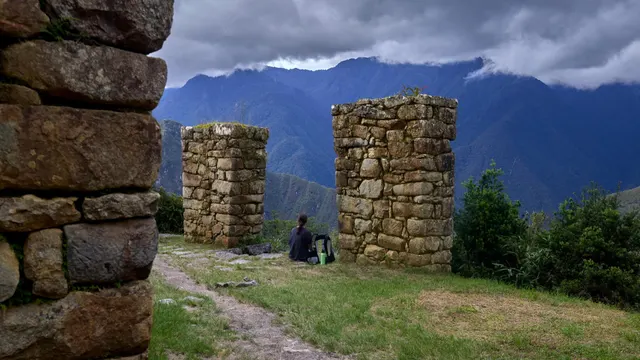
- Royal sector: you pass the Temple of the Sun, the House of the Inca, the ceremonial fountains and the Three Doorways sector.
- Mountain checkpoint: next to the Sacred Rock. There’s no grace period here: arrive before the time shown on your ticket.
- The climb: narrow, very steep stairways, some carved into the rock, with steel cables as handrails and spots where it helps to use your hands.
- Summit: terraces and boulders from which you see the Inca city at your feet and the Urubamba River curving around the mountain. Allow 20 to 30 minutes at the top.
- Descent and exit: back through the same sector, with a visit to the Temple of the Condor before you leave.
In all, the full visit usually takes 2 h 30 min to 3 h 30 min, within the 6-hour maximum the route allows.
The Route on the Official Map
You can download the Route 3-A map from Tu Boleto with the “Ver ruta” (view route) button, and it’s worth keeping it on your phone. It marks the entrance, the mountain checkpoint booth, the explanation areas where guides stop with their groups, and the exit, which is at a different point from the entrance. Like every route since June 2024, it runs one way: you can’t turn back to repeat a sector, so take your photos of the Inca city as you pass through it, before you reach the checkpoint.
The same map shows the maximum time allowed on the route, 6 hours. That’s more than enough to climb without rushing, but not enough to spend the whole day inside the sanctuary.
The Huayna Picchu Stairs: Difficulty and Fear of Heights
The Huayna Picchu stairs are the reason for its fame and for the respect it commands. The trail is short, but it climbs almost without a break, with tall, narrow steps and sections with a drop-off on one side. It’s less tiring on the legs than a long hike, but it demands concentration, especially on the way down, when you’re looking into the void the whole time.
- It’s for you if: you’re in good shape, you don’t have a fear of heights and you like short, intense climbs.
- It’s not for you if: you have a real fear of heights, knee problems or you’re traveling with young children.
- With teenagers: it can be the highlight of the trip if they’re fit and acclimatized. See our tips for Machu Picchu with kids.
Why Do People Call Them the “Stairs of Death”?
On English-language blogs and forums you’ll see the nickname “stairs of death.” It isn’t an official name or an accident statistic: it describes the final sections, with narrow, uneven granite steps tucked into the vegetation and a drop-off on one side. Andina presents it as one of the most difficult and risky routes in the sanctuary, one that requires good physical condition. The nickname is scarier than the trail if you climb calmly, use the cables and don’t stop at the edge to take photos.
Closures for Rain and Maintenance
The mountain closes when the trail needs it. In 2025, a landslide caused by heavy rain damaged a section of the path; after rock cutting, the stabilization of a retaining wall and the installation of steel-cable handrails, it reopened on April 28, 2025, according to Andina.
Route 3-A closed again from June 1 to 30, 2026, from the checkpoint booth to the summit, for conservation work. According to the Ministry of Culture, Inca stairways were stabilized, walls and drains were cleaned, and new stairs and steel-cable railings were installed on the steepest sections. It reopened on July 1, 2026. These closures are announced at short notice, so check the official portal before you travel.
Important: in the rain, the steps get slippery and the risk goes up. In the rainy season, from November to April, wear shoes with grippy soles and take the descent slowly. Trekking poles aren’t allowed inside the sanctuary.
Minimum Age and Health
Tu Boleto doesn’t list a minimum age for Route 3-A. The 2026 measures reported by Andina only state that minors must be accompanied by an adult. Not being banned doesn’t make it a good idea for everyone: if you have heart or knee problems or a strong fear of heights, choose a less demanding route and check with your doctor before your trip.
What to See on Huayna Picchu
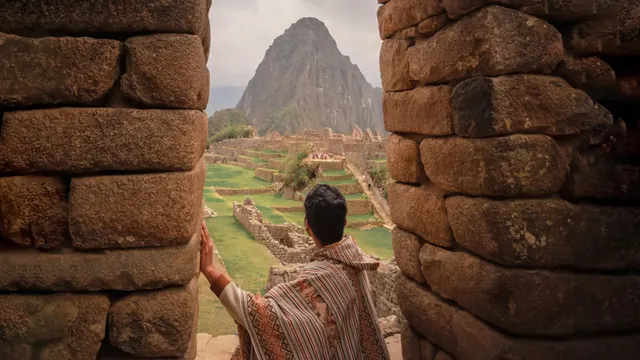
- The view of the Inca city from above: the reverse of the postcard. From the summit you see Machu Picchu from the mountain in the photo, with the terraces and the plaza clearly laid out.
- The structures on the summit: Inca terraces and rooms built in a tiny space, on the edge of the cliff.
- The Urubamba canyon: the river wraps around the mountain, and on clear days you can see the switchback road climbing up from Aguas Calientes.
- The royal sector: Route 3-A includes the temples with the finest stonework in the city, something Machu Picchu Mountain doesn’t offer.
The Temple of the Moon Isn’t on Route 3-A
Many older guides describe the Great Cavern, the so-called Temple of the Moon, as a side trip on the Huayna Picchu climb. That’s no longer the case: the Great Cavern, on the slopes of the mountain, has its own ticket, Route 3-C, sold only in peak season. According to Tu Boleto it’s about 3 km round trip with a high level of effort, and its official map allows up to 7 hours. With a Huayna Picchu ticket you can’t detour to it. It’s explained in Great Cavern of Machu Picchu: Route 3-C.
Huayna Picchu Tickets
Huayna Picchu isn’t sold separately. When you buy your Machu Picchu entry on the official Tu Boleto portal, you choose Circuit 3 and, within it, Route 3-A, with a date and entry time. That ticket includes the Inca city (royal sector) and the mountain.
- Spots: very few per day, far fewer than on the circuits without a mountain. It’s the first route to sell out in peak season.
- How far ahead: from May to October, buy it as soon as you have your dates.
- Price: it’s in the highest fare bracket, along with Machu Picchu Mountain and the Great Cavern. For Peruvians, residents and citizens of the Andean Community it’s S/ 112 in 2026; for foreigners, the portal shows the exact price when you choose the route.
- In-person sales: the ticket office in Machu Picchu Pueblo releases a few mountain spots for the following day. It’s a backup plan.
Route 3-A Entry Times and Spots
The circuits without a mountain have an entry slot every hour, but Route 3-A is sold for just two entry times. When we checked the portal on November 2, 2026, they were 7:00 a.m. and 10:00 a.m. When the mountain reopened in April 2025, Andina reported slots at 7:00 a.m. and 9:00 a.m.: times change, so confirm them when you buy.
Tu Boleto doesn’t publish the mountain’s total daily capacity; it only shows how many tickets are left for each time slot. For in-person sales in Machu Picchu Pueblo, the 2026 measures set 50 tickets a day for Route 3-A, according to Andina. Cusco travel agencies cite about 350 tickets a day, in two groups of about 175 (7:00 and 10:00 a.m.): about 300 online plus the 50 sold in person. It’s an agency figure, not an official one, but it matches the availability the portal shows.
How Far Ahead It Sells Out
On November 2, 2026, the portal had no Route 3-A tickets for any day through November 29, even though those dates were already regular season. For November 30 there were 75 tickets left for 7:00 a.m., and the 10:00 a.m. slot was sold out. It’s a snapshot of a single day, but it gives you an idea: allow several weeks of leeway even outside peak season, and even more from May to October.
How to Buy on Tu Boleto
You buy directly at tuboleto.cultura.pe: choose Circuit 3, Route 3-A, the date and the time, enter how many tickets you want (1 to 5 per purchase) and click “Iniciar compra” (start purchase). At the entrance you’ll be asked for valid ID: a Peruvian DNI, a foreign resident card or a passport. The whole system is explained in our guide to Machu Picchu tickets, and fares by traveler type in Machu Picchu ticket types.
Tip: if Huayna Picchu is already sold out for your date, look at Machu Picchu Mountain for the same day or, in peak season, Huchuy Picchu, which covers the same royal sector with much less effort.
Best Season and Time to Climb
The mountain is open all year, but the experience changes a lot depending on the season:
- Dry season (May to September): dry steps and more clear days, but more people on the trail.
- April and October: a good balance between weather and crowds.
- Rainy season (November to March): more availability and very green scenery, in exchange for wet steps and summits hidden in the clouds.
In the morning, mist often covers the summit for a while and clears by mid-morning. The 7:00 a.m. slot is cooler for the climb and gives you leeway if the view takes time to open up; the 10:00 a.m. slot usually finds a clearer summit, but with more sun on the stairs. Check the driest months in Cusco weather by month.
Tip: spend the night before in Aguas Calientes and choose the 7:00 a.m. slot. You’ll climb without worrying about your return train and with fresh legs.
What to Bring to Huayna Picchu
- Shoes with good soles: hiking shoes or sneakers with grip. Hard soles are banned.
- Water: at least half a liter per person, in a reusable bottle.
- A light rain jacket and sunscreen: at the summit you can go from sun to rain in minutes.
- Insect repellent: there are mosquitoes in the forest on the slopes.
- A small backpack: no larger than 40 × 35 × 20 cm, so your hands are free for the sections with cables.
- Original passport or ID: the same one you used to buy your ticket.
The list of banned items is in what not to bring to Machu Picchu.
Huayna Picchu or Machu Picchu Mountain?
It’s the big question for anyone who wants to climb a mountain at Machu Picchu. Huayna Picchu is shorter, more vertical and more exposed, and it includes the royal sector. Machu Picchu Mountain is higher and longer, with wider stairways and the broadest panorama, but it doesn’t go through the urban area. We compare them point by point (distance, elevation gain, exposure, views and times) in Huayna Picchu vs. Machu Picchu Mountain: which to choose.
Bottom Line: How to Plan Your Climb
- Decide whether Huayna Picchu is right for you: no fear of heights, in good shape and up for a short, intense climb.
- Buy Route 3-A on the official portal as soon as you have dates, ideally on the 7:00 a.m. slot.
- Book the train and a night in Aguas Calientes based on the time on your ticket.
- Get to the mountain checkpoint with time to spare: there’s no grace period there.
If Huayna Picchu is sold out or doesn’t appeal to you, there are alternatives inside the sanctuary: compare every route in Machu Picchu circuits.
Frequently asked questions
How high is Huayna Picchu?
About 2,720 m (8,920 ft) above sea level according to Inca Rail; the PromPerú map gives 2,682 m. Either way, it’s almost 300 m of climbing from the Inca city, which sits at 2,430 m.
How long does it take to hike Huayna Picchu?
Between 45 minutes and an hour to climb at a normal pace. With the royal sector, the summit and the descent, the full visit usually takes 2 h 30 min to 3 h 30 min.
Is the Huayna Picchu hike dangerous?
The trail is safe if you take it slowly, but it has narrow steps, exposed sections and support cables. It’s not recommended if you have a strong fear of heights, with young children or in heavy rain.
How do I buy Huayna Picchu tickets?
On the Ministry of Culture’s official Tu Boleto portal, by choosing Circuit 3 and Route 3-A with a date and time. The same ticket includes entry to the Inca city.
How far in advance should I buy Huayna Picchu tickets?
From May to October, as soon as you have dates, because it’s the first route to sell out. In the rainy season there’s usually more availability, but it’s wise to check the portal a few weeks ahead.
Are Huayna Picchu and Wayna Picchu the same?
Yes. They’re two spellings of the same Quechua name; the Ministry of Culture uses Waynapicchu in its official documents.
Is there a grace period if I’m late for the Huayna Picchu checkpoint?
No. The main gate has a 30- or 45-minute grace period depending on the season, but the mountain checkpoint has none: if you arrive late, you may not be allowed to climb.
What time can you climb Huayna Picchu?
Route 3-A has only two entry times. On November 2, 2026, the Tu Boleto portal offered 7:00 a.m. and 10:00 a.m.; in April 2025 they were 7:00 a.m. and 9:00 a.m., so confirm the time when you buy.
How many Huayna Picchu tickets are there per day?
The portal doesn’t publish the total daily capacity, only the tickets left for each time slot. For in-person sales in Machu Picchu Pueblo, the 2026 measures set 50 tickets a day for Route 3-A, according to Andina. Cusco travel agencies cite about 350 tickets a day, in two groups of about 175 (7:00 and 10:00 a.m.): about 300 online plus the 50 sold in person. It’s an agency figure, not an official one, but it matches the availability the portal shows.
Is there a minimum age to climb Huayna Picchu?
Tu Boleto doesn’t list a minimum age for Route 3-A; minors must be accompanied by an adult. Because of the exposed stairs, it’s not a good choice with young children.
Does the Huayna Picchu ticket include the Temple of the Moon?
No. The Great Cavern, known as the Temple of the Moon, has its own ticket, Route 3-C, sold only in peak season: about 3 km round trip with a high level of effort.
Why does Huayna Picchu sometimes close?
Because of rain damage or maintenance. In 2025 it reopened on April 28 after a landslide, and in 2026 it closed from June 1 to 30 for conservation work. Check the official portal before you travel.
Official sources
- Tu Boleto (Peru’s Ministry of Culture): official route descriptions tuboleto.cultura.pe
- Official map of Route 3-A (Waynapicchu Mountain) machupicchu.gob.pe · PDF · Download the original PDF
- Ministry of Culture: entry times and grace periods machupicchu.gob.pe · PDF · Download the original PDF
- Ministry of Culture: rules of conduct at Machupicchu machupicchu.gob.pe
- Inca Rail: comparison of the Machu Picchu mountains (elevations) blog.incarail.com

How we put this guide together
Written by Paul Pumalloclla · 17 years in tourism
- Official sources Prices, opening hours and rules checked against Peru’s Ministry of Culture, SERNANP, PromPerú and the train and bus operators.
- Sources cited Every guide links to the sources we used at the end.
- Always up to date When a rule changes, we update the guide and its date.
We’re not a travel agency: we don’t sell tours or take bookings. If a link belongs to a commercial partner, we label it next to the link, and that never changes the facts or the recommendations.
Guide history
- Published
- Last reviewed
Spotted something out of date?
Let us know and we’ll check it against the official source.
Report a change