Key facts
- It’s the valley of the Vilcanota-Urubamba River between Pisac and Ollantaytambo, in the provinces of Calca and Urubamba (Cusco).
- It begins about 32 km from Cusco, at Pisac, some 48 minutes away by road; Ollantaytambo is 72 km away, about 1 h 45 min.
- The valley floor sits at about 2,800–2,970 m, lower than Cusco; Chinchero (3,760 m) and Moray (3,385 m) are higher up, on the plateau.
- Its four archaeological parks are visited with the Cusco Tourist Ticket; the Maras Salt Mines have their own entrance fee.
- Most trains to Machu Picchu leave from Ollantaytambo, which is why the valley is combined with the trip to the citadel.
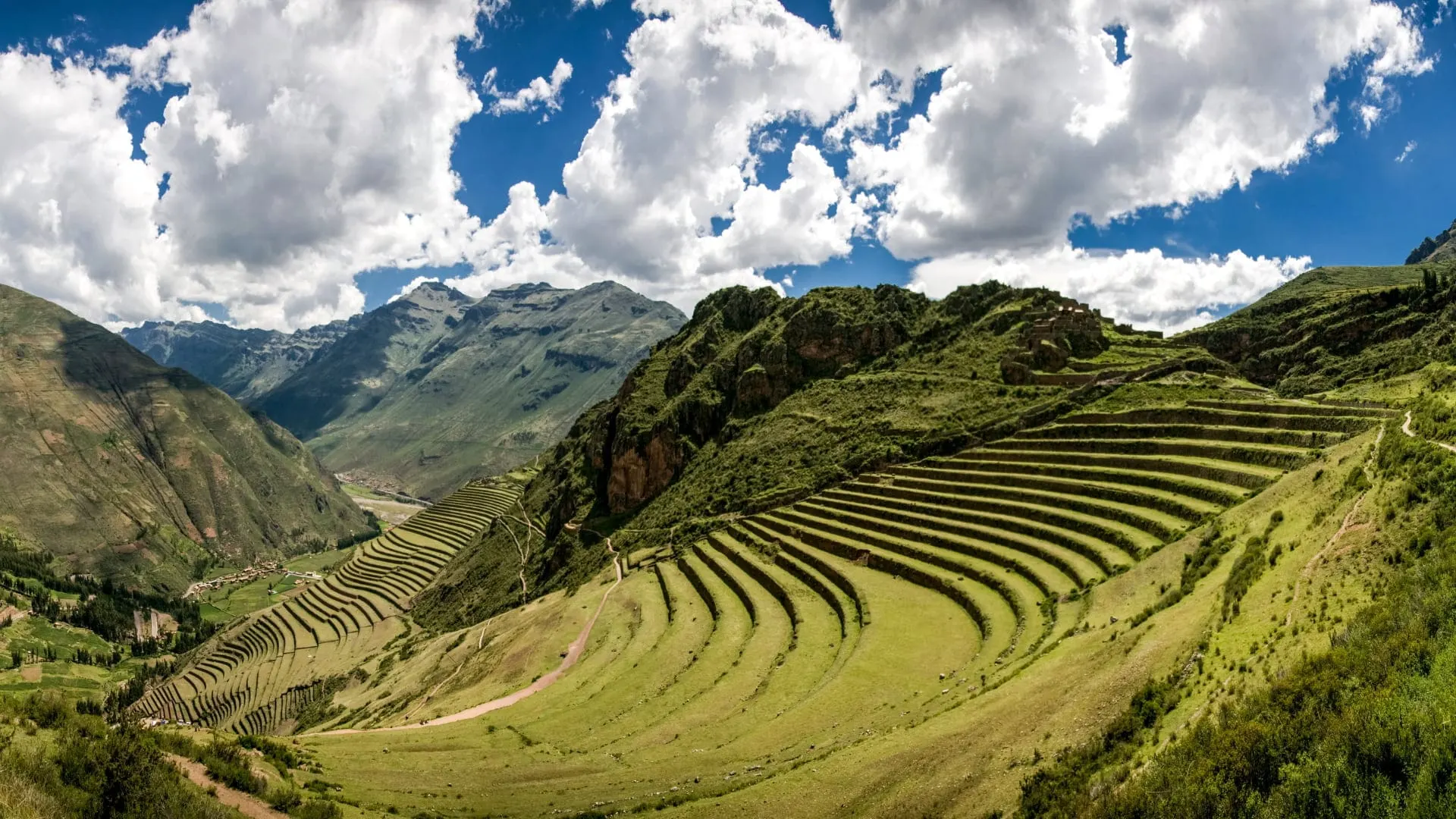
The Sacred Valley of the Incas is the valley of the Vilcanota River, known here as the Urubamba, between the towns of Pisac and Ollantaytambo in the Cusco region of Peru. It begins about 32 km from the city of Cusco, some 48 minutes away by road, and it sits lower and is milder than the city: the valley floor lies at roughly 2,800 to 2,900 m. It brings together Inca terraces and citadels, living towns, markets and the train station for Machu Picchu.
What is the Sacred Valley of the Incas?
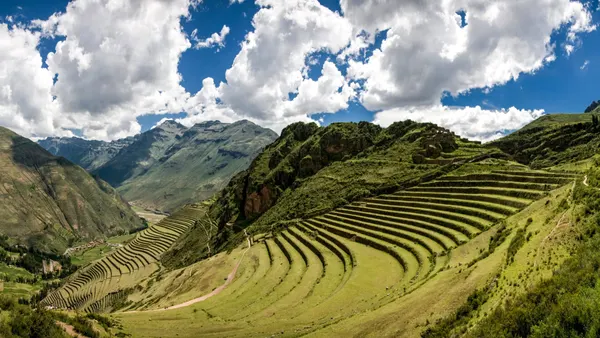
It’s a fertile strip of Andean valley that the Incas turned into one of their most important farming and residential areas. On its slopes they built terraces for growing corn, food storehouses, temples and homes for the nobility. Today large archaeological parks survive, such as Pisac and Ollantaytambo, and on the high plateau around the valley you’ll find Chinchero and Moray.
When people search for “Sacred Valley” or “Sacred Valley Peru,” they almost always mean that whole area: the valley floor between Pisac and Ollantaytambo, plus the towns and sites on the plateau around Chinchero and Maras. It’s the most popular day trip from Cusco after Machu Picchu, and many travelers also use it as a base to sleep during their first few days.
Where is the Sacred Valley?
The Sacred Valley is in the department of Cusco, north and northwest of the city of the same name. It mostly spans two provinces: Calca, home to Pisac, and Urubamba, home to Urubamba, Ollantaytambo, Chinchero and Maras. The river flows from southeast to northwest and, past Ollantaytambo, narrows into a gorge that drops toward the cloud forest until it reaches Machu Picchu.
Distances from the city of Cusco are short: Pisac is about 32 km away, Chinchero about 30 km, Moray and the salt mines about 55 km, and Ollantaytambo 72 km along the road through Chinchero and Urubamba, around 1 h 45 min.
Sacred Valley elevation
The Sacred Valley’s elevation is its big advantage for travelers: the valley floor sits between 400 and 600 meters below Cusco. But not all of the valley is low. The Chinchero and Maras plateau is as high as the city or higher, so it’s worth telling apart sleeping on the valley floor from simply passing through the plateau.
Sacred Valley: distance from Cusco and altitude of each stop
- Starting point
- Cusco3,399 m
- Along the Chinchero road
- Chinchero30 km away, higher than Cusco3,760 m
- Morayabout 55 km away, via Maras; almost as high as Cusco3,385 m
- Urubamba50 km away, on the valley floor≈ 2,870 m
- Ollantaytamboat the end of the valley, where the train leaves2,792 m
- Along the Pisac road
- Pisac32 km away2,972 m
| Place | Approximate elevation | Distance from Cusco | What it is |
|---|---|---|---|
| Cusco (reference) | 3,399 m | — | Starting point |
| Pisac (town) | 2,972 m | 32 km, 48 min | Market and archaeological park |
| Urubamba | 2,870 m | Via Chinchero, on the way to Ollantaytambo | The valley’s central town |
| Ollantaytambo | 2,792 m | 72 km, 1 h 45 min | Inca town, fortress and train |
| Chinchero | 3,760 m | 30 km, 35 min | Plateau town known for weaving |
| Moray | 3,385 m | 55 km, 1 h 30 min | Circular terraces |
| Maras Salt Mines | About 3,200 m | About 54 km | Salt pools on a hillside |
Tip: if you’re flying into Cusco from Lima, a good strategy is to head straight down to the Sacred Valley and spend one or two nights there before going up to the city. Stay in Pisac, Urubamba or Ollantaytambo, not in Chinchero, which is higher than Cusco. More advice in our guide to altitude sickness in Cusco.
What to see in the Sacred Valley
Each place has its own guide on this site. Here’s an overview to help you decide what to include in your trip.
Pisac
It’s the gateway to the valley when you’re coming from Cusco. Up on the mountain above the town is one of the largest Inca complexes in the region, with terraces that curve down the slope, a ceremonial sector with an Intihuatana carved into the rock and, across a ravine, a large Inca cemetery with tombs dug into the hillside. Down below, the colonial town has one of the best-known craft markets in the Cusco area. It’s all in our guide to Pisac.
Ollantaytambo
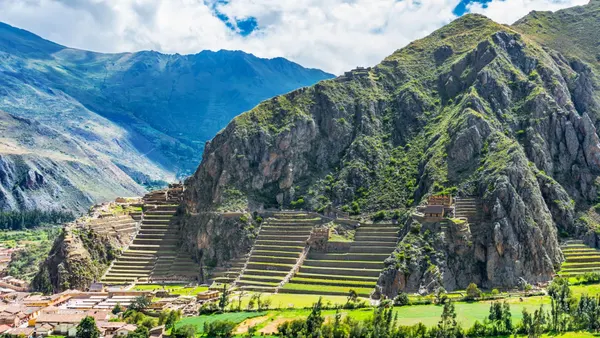
It sits at the end of the valley and is the most complete stop. Its archaeological park climbs a hillside of terraces up to the Temple of the Sun, with six monoliths of pink stone hauled from a quarry on the other side of the river. The town keeps its Inca layout, with narrow streets and water channels that still run. On top of that, most trains to Machu Picchu leave from its station. Details in our guide to Ollantaytambo.
Chinchero
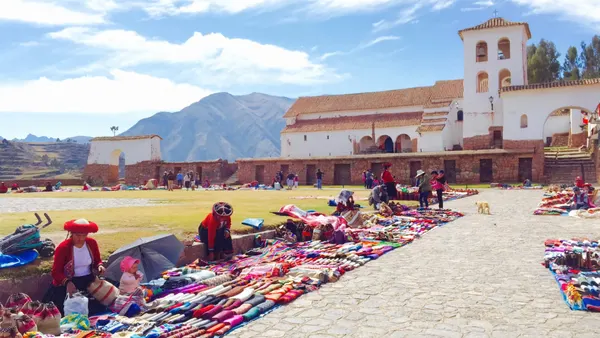
It’s up on the high plateau, on the way between Cusco and Urubamba. It has a colonial church built on top of the palace of the Inca Túpac Inca Yupanqui, Inca terraces running down the slope and weaving centers where the weavers explain how they dye wool with plants. There’s a market on Sundays. Read our guide to Chinchero.
Maras and Moray
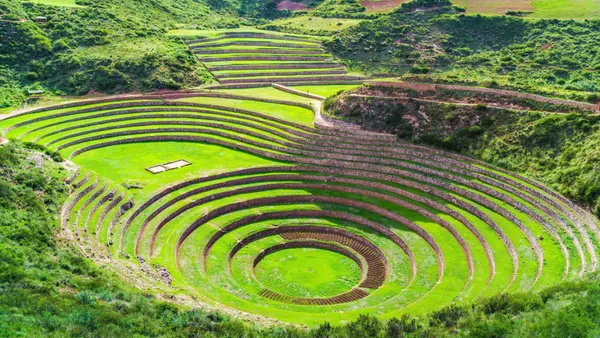
Two very different places on the Maras plateau, just a few kilometers apart. Moray is a set of concentric circular terraces that the Incas are believed to have used to test crops in different microclimates. The Maras Salt Mines are thousands of terraced salt pools on the side of a ravine, worked by local families. Both are covered in our guide to Maras and Moray.
Urubamba and the towns on the valley floor
Between Pisac and Ollantaytambo, the road passes through towns such as Calca, Yucay and Urubamba, the provincial capital and the valley’s service hub. This is where many of the hotels and restaurants are, and it’s usually the lunch stop on day trips. It’s corn country: Giant White Corn of Cusco (Maíz Blanco Gigante Cusco) has a protected designation of origin for the provinces of Calca and Urubamba. If you’re interested in local cooking, take a look at our guide to traditional Cusco food.
Lares, north of the valley
From Calca, a road heads to the Lares valley, known for its hot springs and its weaving communities. It’s off the classic route, but it’s a good option if you have an extra day or you’re looking for a cultural trek to Machu Picchu.
Calca
Calca is the capital of the province of the same name and sits on a short stretch of flat land in the Vilcanota valley, with the snowcapped Pitusiray to the north. According to the Decentralized Culture Office (DDC) of Cusco, it’s 51 km from the city. Before you get there, the valley road passes through the towns of Coya and Lamay. The chroniclers Betanzos and Murúa wrote that the Inca Huáscar had a town built here, and excavations have confirmed that today’s center stands on top of an Inca settlement. In 1536, Manco Inca fell back to Calca with his people to fight the Spanish. The road to Lares starts here, and Huchuy Qosqo sits in the heights about 5 km to the south.
Huchuy Qosqo
Its Quechua name means “Little Cusco,” and it was given in the early 20th century because its layout resembles that of the Inca capital; the site’s old name is Qaqyaqawana. It’s an Inca complex high on Qaqya mountain, at 3,677 m, looking out over the valley. It has terraces that start right at the edge of the cliffs, ceremonial platforms, and buildings of stone and adobe whose adobe walls are still standing. The chronicler Sarmiento de Gamboa wrote that the area was conquered in the time of the Inca Wiracocha.
No road reaches the site: you can only get there on foot. According to Peru’s Ministry of Foreign Trade and Tourism (Mincetur) tourism inventory, the short route leaves from the town of Lamay, 45 km from Cusco, and climbs 6 km along a footpath, about 3 hours. The long one is a hike of about 25 km from Tambomachay, on the outskirts of Cusco, taking about 7 hours on a mule trail. Both call for good acclimatization and fitness: bring water, warm layers and sun protection, and go with a guide if you don’t know the area. For more on Wiracocha and his successors, see our guide to Inca history and culture.
Yucay
Yucay is Urubamba’s neighbor, about 3 km from its center, and it’s surrounded by Inca terraces. According to the Mincetur record, the Yucay archaeological zone has more than 79 terraces over about 100 hectares, with stone walls 3 to 9 m high and a canal system that still works; about 900 m from the terraces stands the so-called palace of Sayri Túpac. In June 2026, the Ministry of Culture, through the DDC Cusco, began a five-year project to restore more than one million square meters of terraces in Yucay and its Molinuyoq annex, according to El Peruano. While the work lasts, ask on site which sectors are open.
Sacred Valley markets and handicrafts
Markets are as much a part of the visit as the ruins. The two best known are in Pisac and Chinchero, and in both the big day is Sunday, according to PromPerú, Peru’s tourism board.
- Pisac market: it fills the main square and the surrounding streets with stalls of textiles and handicrafts. There are stalls every day, but PromPerú highlights the Sunday market as one of the biggest and most colorful fairs in the area: that day, producers from nearby communities also come with fruit, vegetables and other goods. It fits nicely after you come down from the ruins.
- Chinchero market: on Sundays it sets up in the town’s main square. Chinchero also keeps up trueque, the barter of goods between families, which the DDC Cusco describes as a deep-rooted practice.
- Chinchero weavers: at the weaving centers they show how they spin, dye with plants and weave. According to the DDC Cusco, their textiles keep Inca symbols and use natural dyes.
To shop well, buy directly from the weaver, ask what fiber each piece is made of and carry soles in small bills. If you’re interested in alpaca or vicuña fiber, take a look at our guide to llamas and alpacas in Cusco.
Things to do in the Sacred Valley besides ruins
The valley is also an adventure destination. The Urubamba record in Mincetur’s tourism inventory notes that hiking, river rafting, mountain biking and horseback riding take place in the surrounding area, and Peru’s state news agency Andina adds places in the province for paragliding, climbing and ziplining.
- Rafting on the Urubamba River: a common stretch within the valley runs from near Pachar to the outskirts of Ollantaytambo, with Class I to III rapids, of low to moderate difficulty, according to a 2026 National Geographic feature. The dry season, from May to September, is the best time; in the rainy season, always ask about river conditions before booking.
- Mountain biking: Andina lists Chinchero, Maras, Urubamba, Huayllabamba and Ollantaytambo among the places to ride, with circuits that pass Inca sites. A popular route crosses the plateau between Chinchero, Maras and Moray on rural roads and can include the salt mines.
- Horseback riding: according to Andina, it’s offered in Ollantaytambo, Maras and Chinchero. Before you ride, check that the horses are in good condition and that a guide goes with the group.
- Hiking: besides Huchuy Qosqo, the Pisac archaeological park is explored on foot through sectors spread over about 4 km, according to Mincetur, and the valley is the starting point for several treks to Machu Picchu, compared in our guide to Machu Picchu treks.
- Paragliding and ziplining: Andina mentions Chinchero, Maras and Huayllabamba for paragliding, and Huayllabamba and Ollantaytambo for ziplining.
Safety depends above all on who you go with. In tourist rafting, every guide steering a raft needs a license from the Regional Office of Foreign Trade and Tourism (Dircetur), under Supreme Decree 006-2016-MINCETUR: ask to see it, along with the agency’s authorization. Insist on a helmet and a life jacket, check that your travel insurance covers adventure sports, and avoid strenuous activities during your first days at altitude. When it reported on these activities in 2018, Andina noted that ziplining had caused several deaths in Cusco in the preceding months.
Sacred Valley route in one day, stop by stop
The classic one-day route is a loop so you don’t repeat any road: it drops into the valley at Pisac, follows it downstream through Calca, Yucay and Urubamba to Ollantaytambo, and returns to Cusco across the Chinchero plateau. The distances and times in the table come from Mincetur’s Tourism Resources Inventory, rounded. They’re driving times, not counting stops or traffic.
| Leg | Approx. distance | Driving time | What to see |
|---|---|---|---|
| Cusco → Pisac | 32 km | 48 min | Town and market; the archaeological park is 9 km farther up by road (15 min) |
| Pisac → Ollantaytambo, via Calca, Yucay and Urubamba | 58 km | 1 h 30 min | Coya, Lamay and Calca; Yucay terraces; lunch in Urubamba; Inca fortress and town |
| Ollantaytambo → Urubamba | — | — | Back along the same valley road |
| Urubamba → Chinchero | 21 km | 20 min | Climb to the plateau; passes the turnoff to Maras and Moray |
| Chinchero → Cusco | 30 km | 35 min | Colonial church, terraces and weaving centers |
- Pisac, in the morning: go up to the archaeological park first, with its sectors spread over about 4 km, and then head down to the market. Early on, there are fewer groups.
- Calca and Yucay, along the way: the road runs through Coya, Lamay and Calca; if you’re traveling on your own, the Yucay terraces are worth a short stop.
- Urubamba, at midday: it’s the usual lunch stop, halfway along.
- Ollantaytambo, in the afternoon: the longest visit of the day, between the fortress and the Inca town. If you’re continuing to Machu Picchu, this is where you catch the train and don’t go back to Cusco.
- Chinchero, late in the afternoon: on the way back, the church, the terraces and the weaving centers. From here it’s about 30 km to Cusco.
Variation with Maras and Moray
If you add Maras and Moray, the practical approach is to leave via Chinchero and return via Pisac, or to give them a second day. The turnoff to Maras is on the road from Chinchero to Urubamba. These are the distances Mincetur gives:
- Cusco to the Maras turnoff, via Chinchero: 43 km, 1 h 10 min.
- From the turnoff to the town of Maras: 4.5 km, 7 min.
- From Maras to Moray: 8 km, 15 min.
- From Maras to the salt mines: 6.6 km on a gravel road, 20 min, or 3.7 km on foot along a mule trail, about 45 min.
With these two stops, the day gets much longer. Many agencies sell this combination as a separate full-day trip, sometimes under the name “Sacred Valley VIP.”
How to get to the Sacred Valley from Cusco
There are two roads from Cusco, and almost every visit combines both in a loop:
- Via Pisac: the road heads north, passes Sacsayhuamán and Tambomachay and drops into the valley at Pisac. From there it follows the valley floor to Calca, Urubamba and Ollantaytambo.
- Via Chinchero: the road crosses the plateau through Chinchero, where the turnoffs for Maras and Moray are, and descends to Urubamba. It’s the most direct route to Ollantaytambo.
Public transportation
Shared colectivos and minivans leave Cusco as soon as they fill up. The most popular stops are on Calle Puputi, for Pisac, and on Calle Pavitos, for Urubamba and Ollantaytambo via Chinchero. Stops and fares change over time, so check with your hotel before you set out. It’s the cheapest option, but reaching places like Moray or the upper part of Pisac then requires a local taxi.
Taxi or private car
Hiring a taxi for the day lets you plan the route at your own pace and stop wherever you like. Agree on the price, the stops and the waiting time beforehand.
Organized day trip
The most common format is the full-day trip from Cusco offered by many agencies. They usually leave around 7:00 a.m., last about 10 hours and typically include transportation, a guide and a buffet lunch in Urubamba. Before you book, ask exactly which places are included and whether the price covers the Tourist Ticket, which is often paid separately.
From the airport
If you fly into Cusco, you can go from the airport to the valley without passing through the city, by taxi or transfer. That way you start your trip at a lower elevation. Flights and schedules from Lima are in our guide on how to get from Lima to Cusco.
Sacred Valley entrance: the Cusco Tourist Ticket
There’s no single entrance ticket to the Sacred Valley: the four archaeological parks in Circuit III, Pisac, Ollantaytambo, Chinchero and Moray, can only be visited with the Cusco Tourist Ticket. They don’t sell individual tickets. According to Cosituc’s price list, the Sacred Valley partial ticket costs S/ 70 for foreigners and is valid for 2 days; the full ticket, which adds Sacsayhuamán, the South Valley and museums, costs S/ 130 and is valid for 10 days.
Important: the Maras Salt Mines aren’t included in the Tourist Ticket. They have their own entrance fee, charged by the community company that runs them and paid in cash on site. Bring soles in coins and small bills.
Sacred Valley weather and best time to go
Because it’s lower than Cusco, the valley is milder: the days are pleasant and the nights less cold than in the city. It follows the same two seasons as the rest of the region:
- Dry season, from May to September: clear skies, sunny days and cold nights. It’s the best time for photos and hikes, and also the busiest.
- Rainy season, from December to March: showers, almost always in the afternoon, and a very green valley. The rain rarely gets in the way of sightseeing.
- April, October and November: transition months, with good weather and fewer people.
In any month, the sun is strong at this elevation: bring sunscreen, a cap and a warm layer for the morning and evening. Month-by-month temperatures and rainfall are in our guide to Cusco weather.
The Sacred Valley and Machu Picchu
The valley is the natural route to Machu Picchu. Most PeruRail and Inca Rail trains to Aguas Calientes leave from Ollantaytambo station, and the ride takes 1 h 30 min to 2 h. That’s why the classic combination is to tour the valley during the day and catch the afternoon train, or to spend the night in the valley and travel the next day. Schedules, classes and stations are in our guide to the train to Machu Picchu, and the other options are in how to get to Machu Picchu.
Near Ollantaytambo, at km 82 of the railway, is also where the classic four-day Inca Trail begins.
How many days to spend and where to stay
- One day: the classic loop of Pisac, Urubamba, Ollantaytambo and Chinchero, back to Cusco. It’s intense, but it covers the essentials.
- Two days: one day for Pisac and the valley floor, with a night in Urubamba or Ollantaytambo, and another for Chinchero, Moray and the salt mines. It fits nicely with the 2-day Sacred Valley partial ticket.
- Three days or more: add Lares, unhurried walks along the terraces or an extra night in Ollantaytambo before the train.
As for where to stay, Pisac is quiet and close to Cusco, Urubamba has more hotels and services, and Ollantaytambo is convenient if you’re catching an early train. Ideas for fitting the valley in with the city and Machu Picchu are in our 3-, 5- and 7-day Cusco itinerary.
History of the Sacred Valley
Before the Incas, the valley was already home to local farming groups; pottery from earlier cultures, such as the Killke, has been found in Chinchero and Maras. With the Inca expansion of the 15th century, the valley filled up with royal estates and farming works. Tradition credits Pachacútec with planning Pisac and remodeling Ollantaytambo, and his son Túpac Inca Yupanqui with the palace at Chinchero, built around 1480 according to the historian Luis E. Valcárcel.
During the Spanish conquest, the valley was a stage for Inca resistance. In January 1537, Manco Inca’s troops defeated those of Hernando Pizarro at Ollantaytambo; afterward, Manco withdrew to Vilcabamba. In colonial times, towns were founded with churches on top of Inca foundations, like the one in Chinchero, and the valley’s land passed into large haciendas. Quechua communities still work the land, weave and harvest salt as they have for centuries.
Tips for visiting the Sacred Valley
- Buy the Tourist Ticket on the day you start: its validity counts from the day of purchase.
- Start early: the big groups converge on Pisac and Ollantaytambo by mid-morning.
- Comfortable shoes: the Inca sites have long, steep staircases.
- Cash: you’ll need it for the salt mines, the markets and local transportation.
- Water and sunscreen: there’s little shade on the terraces.
- Sunday in Chinchero: if you can, time your visit to coincide with the market.
Tip: if you’re taking the train to Machu Picchu from Ollantaytambo, leave your big suitcase at PeruRail’s free luggage storage at that station and travel with just a small backpack.
Summary: how to plan the Sacred Valley for your trip
- You only have one day: the classic loop of Pisac, Ollantaytambo and Chinchero with the Sacred Valley partial ticket.
- You’re going to Machu Picchu: tour the valley and catch the afternoon train in Ollantaytambo.
- You’ve just arrived in Cusco: spend your first nights on the valley floor to acclimatize.
- You’re into farming landscapes: set aside half a day for Maras and Moray.
- You’ll also explore the city: buy the full Tourist Ticket.
- You want more than ruins: pick a Sunday for the Pisac or Chinchero markets, or add rafting, biking or the Huchuy Qosqo hike with an authorized operator.
The next step is to choose your stops: start with Ollantaytambo, which deserves the most time, and check what the Tourist Ticket covers before you go.
Frequently asked questions
Where is the Sacred Valley of the Incas?
In the Cusco region, north of the city. It follows the Urubamba River from Pisac, about 32 km from Cusco, to Ollantaytambo, in the provinces of Calca and Urubamba.
What is the elevation of the Sacred Valley?
The valley floor sits at about 2,800 to 2,970 m: Ollantaytambo is at 2,792 m and Pisac at 2,972 m. The surrounding plateau is higher: Chinchero is at 3,760 m.
How do you get to the Sacred Valley from Cusco?
By road, in a colectivo, taxi or organized day trip. There are two routes: via Pisac, which reaches the valley in about 48 minutes, and via Chinchero, the more direct way to Urubamba and Ollantaytambo.
How much does it cost to visit the Sacred Valley?
There’s no single entrance ticket. Pisac, Ollantaytambo, Chinchero and Moray are visited with the Cusco Tourist Ticket: the Sacred Valley partial ticket costs S/ 70 for foreigners and the full ticket S/ 130. The Maras Salt Mines are paid separately.
What can you see in the Sacred Valley in one day?
The classic loop includes the archaeological park and market in Pisac, lunch in Urubamba, the Ollantaytambo fortress and Chinchero on the way back to Cusco.
What is the weather like in the Sacred Valley?
Milder than Cusco, because it’s lower. From May to September it’s dry and sunny, with cold nights; from December to March it rains almost every day, mostly in the afternoon.
Is it better to stay in the Sacred Valley or in Cusco?
For your first nights, the Sacred Valley, because it’s lower and helps you acclimatize. Pisac, Urubamba and Ollantaytambo are good bases; Chinchero isn’t, because it’s higher than Cusco.
Can you go from the Sacred Valley to Machu Picchu?
Yes. Most trains to Aguas Calientes leave from Ollantaytambo station, and the ride takes 1 h 30 min to 2 h.
What is the Sacred Valley VIP tour?
It’s a commercial, unofficial name that many agencies give to a full-day trip that adds Maras and Moray to the Pisac, Ollantaytambo and Chinchero loop. Before you book, compare which sites it includes and whether the Tourist Ticket and the salt mines entrance are paid separately.
Can you visit the Sacred Valley without a tour?
Yes. Colectivos leave Cusco for Pisac and, via Chinchero, for Urubamba and Ollantaytambo, and in the valley there are local taxis for sites like Moray. All you need is the Tourist Ticket and your own plan for the order of the stops.
What day is the Pisac market?
There are handicraft stalls every day, but the big day is Sunday, when the market grows and producers from nearby communities come in. Chinchero also has a market on Sundays, in its main square.
How many kilometers is it from Cusco to the Sacred Valley?
According to Mincetur’s tourism inventory, Pisac, the gateway to the valley, is about 32 km from Cusco (48 min) and Urubamba about 50 km via Chinchero. From Pisac to Ollantaytambo, along the valley floor, it’s 58 km.
Official sources
- Cosituc: Cusco Tourist Ticket price list cosituccusco.pe
- Cosituc: circuits and sites included cosituccusco.pe
- Dirección Desconcentrada de Cultura Cusco: Chinchero Archaeological Park culturacusco.gob.pe · PDF · Download the original PDF
- UNESCO Tentative List: Salineras de Maras whc.unesco.org
- PeruRail: train schedules and frequencies perurail.com
- Inca Rail: how to get to Machu Picchu incarail.com
- Mincetur, Tourism Resources Inventory: Pisaq Archaeological Park and access routes consultasenlinea.mincetur.gob.pe
- Dirección Desconcentrada de Cultura Cusco: Calca province culturacusco.gob.pe · PDF · Download the original PDF

How we put this guide together
Written by Paul Pumalloclla · 17 years in tourism
- Official sources Prices, opening hours and rules checked against Peru’s Ministry of Culture, SERNANP, PromPerú and the train and bus operators.
- Sources cited Every guide links to the sources we used at the end.
- Always up to date When a rule changes, we update the guide and its date.
We’re not a travel agency: we don’t sell tours or take bookings. If a link belongs to a commercial partner, we label it next to the link, and that never changes the facts or the recommendations.
Guide history
- Published
- Last reviewed
Spotted something out of date?
Let us know and we’ll check it against the official source.
Report a change