Key facts
- Huayna Picchu (Route 3-A): 2.4 km round trip, short and very vertical, with exposed sections and support cables.
- Machu Picchu Mountain (Route 1-A): 3.8 km round trip and about 650 m of elevation gain, longer but with less vertigo.
- The Huayna Picchu ticket includes the royal sector; the Machu Picchu Mountain ticket doesn’t cover the urban sector.
- Maximum time of 6 h on Huayna Picchu and 7 h on Machu Picchu Mountain, with no grace period at the mountain checkpoints.
- Huayna Picchu has very few spots and sells out first: buy it as soon as you have your dates.
- If you have a fear of heights, choose Machu Picchu Mountain; for less effort, Huchuy Picchu in peak season.
Machu Picchu ticket availability
Seats per route and per day from the official sale. Choose a route to see which dates are still open.
- 1-A · Machupicchu Mountain: Nov 14 (51 seats), Nov 15 (79 seats), Nov 16 (138 seats), Nov 17 (86 seats)
- 1-B · Upper terrace: Nov 27 (37 seats), Nov 28 (125 seats), Nov 29 (89 seats), Nov 30 (513 seats)
- 2-A · Classic Circuit 2: no recent readings
- 2-B · Lower terrace: no recent readings
- 3-A · Huayna Picchu: Nov 30 (75 seats), Dec 1 (188 seats), Dec 2 (235 seats), Dec 3 (250 seats)
Reference seats from the official sale, updated every 30 minutes. They can change within minutes: always confirm on the official site before you buy.
Buy on the official siteIn this guide
- The Quick Answer
- Side-by-Side Comparison
- Real Difficulty: Which One Is Harder?
- Fear of Heights and Safety
- Views: What You See from Each Summit
- Which Part of the Citadel Each Ticket Includes
- How Much Time You Need and How It Fits with the Train
- Availability: Which One Sells Out First
- Which One to Choose Based on Your Profile
- What If I Don’t Want Either One?
- Bottom Line: What to Choose for Your Trip
Choose Huayna Picchu if you want the mountain from the classic photo, a short but very steep climb and, on the same ticket, the temples of the royal sector. Choose Machu Picchu Mountain if you have a fear of heights, prefer a long, steady hike and want the widest view, with snowcapped peaks in the background. Both are high effort and each one has its own ticket: you can’t combine them in a single visit.
The Quick Answer
- Huayna Picchu (Route 3-A): shorter, more vertical and with more sense of exposure. It includes the Temple of the Sun, the House of the Inca and the Temple of the Condor. It has few spots and sells out first.
- Machu Picchu Mountain (Route 1-A): longer and higher, with wide stone stairways and fewer exposed sections. From the summit you see the citadel far below, the valley and the snowcapped peaks. It doesn’t cover the urban sector.
- Neither one appeals to you: look at Huchuy Picchu, a low summit with moderate effort that’s only sold in peak season.
If you’re not yet familiar with how the system of circuits, routes and time slots works, start with our guide to Machu Picchu tickets. Here we focus only on choosing between the two mountains.
Side-by-Side Comparison
Huayna Picchu vs Machu Picchu Mountain in numbers
- Huayna Picchu
- Machu Picchu Mountain
- Elevation gain above the citadel
- Huayna Picchu≈ 290 m
- Machu Picchu Mountain≈ 650 m
- Round-trip distance
- Huayna Picchu2.4 km
- Machu Picchu Mountain3.8 km
- Total hiking time (estimate)
- Huayna Picchu2.5–3.5 h
- Machu Picchu Mountain3–4.5 h
- Maximum time allowed on the route
- Huayna Picchu6 h
- Machu Picchu Mountain7 h
| Feature | Huayna Picchu | Machu Picchu Mountain |
|---|---|---|
| Route and circuit | 3-A, Circuit 3 Royalty | 1-A, Circuit 1 Panoramic |
| Summit elevation | About 2,720 m | About 3,082 m |
| Approximate elevation gain above the citadel (2,430 m) | About 290 m | About 650 m |
| Round-trip distance | About 2.4 km | About 3.8 km |
| Effort level according to the Ministry of Culture | High | High |
| Maximum time allowed | 6 hours | 7 hours |
| Type of trail | Narrow, very steep steps, with sections fitted with support cables | Wider stone stairways, a long and steady incline |
| Vertigo factor | High on several sections | Moderate, mostly near the summit |
| Main view | The citadel up close, from above | The whole citadel, the Vilcanota Canyon and the snowcapped Salkantay and Pumasillo peaks |
| Part of the citadel included | Royal sector: Temple of the Sun, House of the Inca, fountains, Three Doorways and Temple of the Condor | Only the terraces in the upper section |
| Grace period at the mountain checkpoint | None | None |
| Availability | Very few spots; sells out before any other route | Few spots, but it usually stays available longer |
Distances, effort and route according to the official Tu Boleto platform; time allowed according to the official map of each route; summit elevations according to Inca Rail. The elevation gain is an approximate calculation based on those figures.
Real Difficulty: Which One Is Harder?
On paper, both are high effort. In practice, they tire you out in different ways, and that’s what matters most when you choose.
Huayna Picchu: Short, Vertical and Technical
The trail starts at the checkpoint next to the Sacred Rock and climbs almost nonstop up narrow Inca steps, some of them carved into the rock. There are sections where you need to use your hands and others with steel cables as handrails. The climb usually takes between 45 minutes and an hour. It’s easier on your legs than the other mountain, but it demands more concentration, especially on the way down.
Machu Picchu Mountain: Long and Steady
Here the challenge is endurance. You climb about 650 m up wider stone stairways, with few flat stretches. We estimate between 1 h 30 min and 2 h to climb at a normal pace, and a little less to come down. The final sections are narrower and open to the drop, but there are no spots where you have to scramble.
Tip: if you get short of breath walking uphill in Cusco, Machu Picchu Mountain will feel harder than Huayna Picchu. If what holds you back is sheer vertical height, not fatigue, it’s the other way around. Before you decide, check how you’re handling the altitude with our guide to altitude sickness in Cusco.
Fear of Heights and Safety
Huayna Picchu is the option with the most sense of exposure. There are steps with a drop on one side, narrow passages near the summit and a descent that forces you to look down the whole time. If you have genuine vertigo, not just a healthy respect for heights, choose Machu Picchu Mountain.
Route 3-A was closed from June 1 to 30, 2026, for conservation work. According to the Ministry of Culture, Inca stairways were stabilized, walls and drainage channels were cleaned, and new stairs and steel-cable railings were installed on the steepest sections. It reopened on July 1, 2026. These maintenance closures are announced on short notice, so check the official platform before you travel.
Important: when it rains, both mountains get slippery, but on Huayna Picchu the risk is greater because the steps are so narrow. In the rainy season, from November to April, wear shoes with good grip and don’t rush the descent. Trekking poles aren’t allowed inside the sanctuary.
Views: What You See from Each Summit
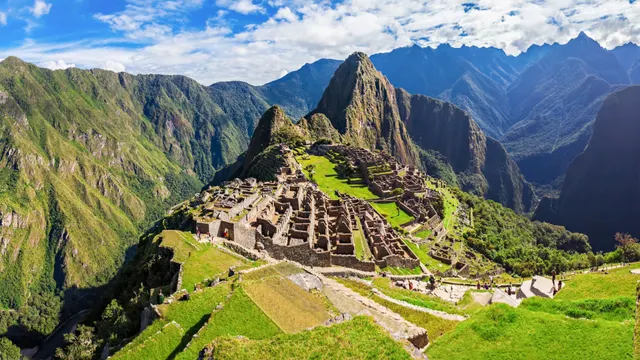
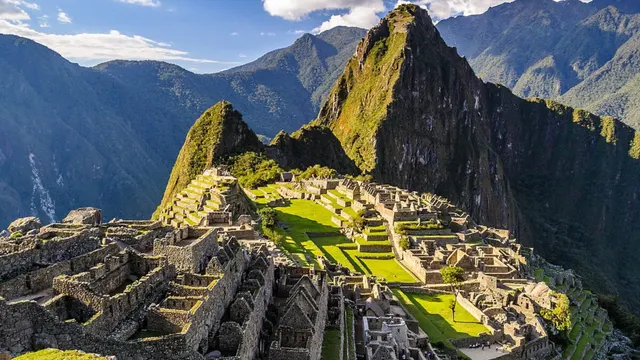
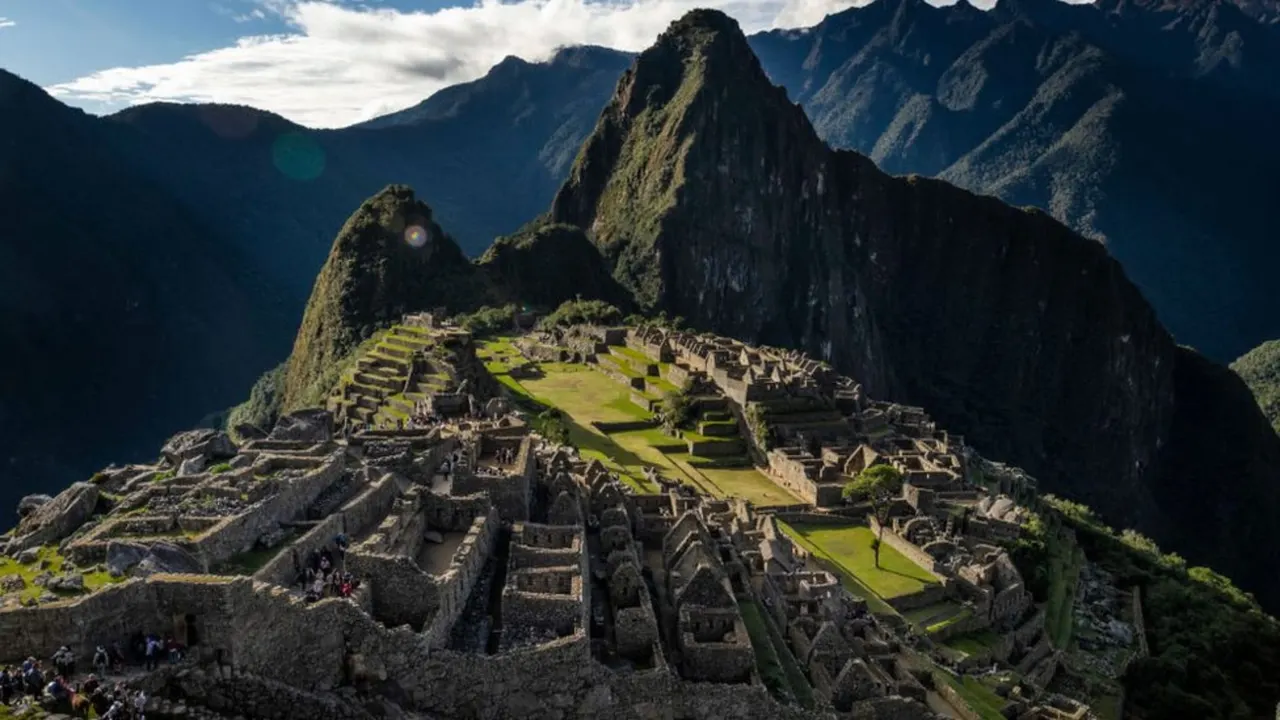
- From Huayna Picchu: the citadel almost at your feet, with the terraces and the plaza clearly laid out, and the Vilcanota River wrapping around the mountain. At the summit there are terraces and small Inca structures. It’s the reverse of the classic photo: you see Machu Picchu from the mountain that appears on the postcard.
- From Machu Picchu Mountain: a much wider panorama. The citadel looks small, with Huayna Picchu behind it, and on clear days the snowcapped Salkantay and Pumasillo peaks come into view, along with the river canyon and the switchback road that climbs up from Aguas Calientes.
On both summits, the morning mist can block the view for a while. In the dry season it usually clears by mid-morning; in the rainy season it’s more unpredictable. You’ll find the clearest months in our guide to Cusco weather by month.
Which Part of the Citadel Each Ticket Includes
This is the difference most people overlook. Each ticket is a one-way route, and each mountain’s route covers different areas of the Inca city.
- Route 3-A (Huayna Picchu): it starts in the agricultural sector, where you can take the classic photo very close to the urban sector, and passes the Temple of the Sun, the House of the Inca, the ceremonial fountains and the Three Doorways sector. From there it heads out to the mountain. On the way back, you visit the Temple of the Condor.
- Route 1-A (Machu Picchu Mountain): it climbs the terraces in the upper section to the checkpoint and continues to the mountain. On the way back, it goes down the terraces toward the exit. It doesn’t enter the main plaza or the temples.
In other words: with Huayna Picchu, you get a mountain and a major part of the citadel on a single ticket. With Machu Picchu Mountain, if you want to explore the urban sector, you need another ticket for a circuit such as Circuit 2, usually in a different time slot or on the following day. The differences between circuits are covered in Machu Picchu circuits: all 10 routes explained.
How Much Time You Need and How It Fits with the Train
The official maps set a maximum of 6 hours on Huayna Picchu and 7 on Machu Picchu Mountain. That’s a limit, not how long it will take you. These are our estimates for a complete visit at a normal pace:
| Stage | Huayna Picchu (3-A) | Machu Picchu Mountain (1-A) |
|---|---|---|
| Main entrance to the mountain checkpoint | 20 to 30 min, through the royal sector | 15 to 20 min, up the terraces |
| Climb | 45 min to 1 h | 1 h 30 min to 2 h |
| Time at the summit | 20 to 30 min | 20 to 30 min |
| Descent and return to the exit | 1 h to 1 h 30 min, including the Temple of the Condor | 1 h to 1 h 30 min |
| Approximate total | 2 h 30 min to 3 h 30 min | 3 to 4 h 30 min |
Add the bus ride back down to Aguas Calientes, 25 to 30 minutes, plus the line. With a mountain, your return train should leave at least five or six hours after your entry time. Schedules and classes are in our guide to the train to Machu Picchu; bus frequencies are in our guide to the bus to Machu Picchu.
Tip: for either one, spend the night before in Aguas Calientes and choose one of the first time slots. You’ll climb in cooler temperatures, without rushing for the train and with time to spare if the mist is slow to lift.
Availability: Which One Sells Out First
Mountains aren’t sold separately: you choose Route 3-A or 1-A when you buy your entry ticket, with its date and time slot. Both have a much smaller daily quota than the circuits without a mountain, and Huayna Picchu is the first route to sell out in peak season.
- If you’re traveling from May to October: buy your mountain as soon as you have your dates. For Huayna Picchu, the sooner the better.
- If Huayna Picchu has no spots left: check Machu Picchu Mountain for the same date or move your day.
- In-person sales: the ticket office in Machu Picchu Pueblo also hands out mountain spots for the following day. On the dates we checked in October 2026, the official platform showed 50 for Route 1-A and 50 for Route 3-A, already handed out the day before. It’s an emergency plan, not your main plan.
Routes with a mountain cost more than the circuits without one, and the price depends on your visitor category. The official platform shows it when you choose the route; categories and documents are covered in Machu Picchu ticket types.
Important: there’s no grace period at the mountain checkpoints. At the main entrance you have 30 minutes of leeway, or 45 in the highest-demand months, but if you’re late for the mountain checkpoint, you may not be allowed to climb.
Which One to Choose Based on Your Profile
- You have a fear of heights: Machu Picchu Mountain, no question.
- It’s your first visit and you only have one ticket: Huayna Picchu, because it includes the royal sector. With Machu Picchu Mountain, you’d see very little of the inside of the citadel.
- You love landscape photography: Machu Picchu Mountain, for the panorama and the snowcapped peaks.
- You want the photo from the postcard mountain: Huayna Picchu.
- You’re in good shape but short on time: Huayna Picchu, which is shorter.
- You’re traveling with kids: neither one is a good idea with young children; see the alternatives in Machu Picchu with kids.
- You bought late and Huayna Picchu is sold out: Machu Picchu Mountain or, in peak season, Huchuy Picchu.
- You want to do both: you need two tickets and, in practice, two days. In a single day, you won’t have the time or the legs for it.
What If I Don’t Want Either One?
There are routes with a hike and elevated views that ask for less effort or less of a head for heights:
- Huchuy Picchu (Route 3-D): 1.7 km round trip, moderate effort, royal sector included. Peak season only.
- Intipunku (Route 1-C): the Sun Gate, at the end of the Inca Trail, with a view of the citadel from another angle. Moderate effort, peak season only.
- Great Cavern (Route 3-C): a trail along the slopes of Huayna Picchu that doesn’t reach the summit. High effort, peak season only.
Bottom Line: What to Choose for Your Trip
If you don’t have a fear of heights, can book ahead and want to see temples and a mountain on the same ticket, choose Huayna Picchu. If you’re after the widest view, would rather walk more and be less exposed, or Huayna Picchu is already sold out, choose Machu Picchu Mountain and add another ticket for the urban sector if you can. To learn more about the postcard mountain, read our Huayna Picchu page; for the other one, see our full guide to Machu Picchu Mountain: Route 1-A.
Both mountains work best with a night in Aguas Calientes, so you can take an early time slot without rushing. If you’re spending more days in the region, plan your Machu Picchu day for when you’re already acclimatized; our Cusco itineraries show how to fit it in.
Frequently asked questions
Which is harder, Huayna Picchu or Machu Picchu Mountain?
Both are rated high effort by the Ministry of Culture. Huayna Picchu is shorter but steeper and more exposed; Machu Picchu Mountain is harder on your legs because it’s longer and climbs more meters.
Which one is better if I’m afraid of heights?
Machu Picchu Mountain. Its stairways are wider and it has fewer sections with a drop on one side than Huayna Picchu.
Can I climb Huayna Picchu and Machu Picchu Mountain on the same day?
You’d need two separate tickets, and there’s no realistic way to do both properly in one day. If you want to do both, split them over two days.
Which mountain lets me see more of the citadel?
Huayna Picchu, because Route 3-A passes the Temple of the Sun, the House of the Inca and the Temple of the Condor. Route 1-A only covers the upper terraces.
Which one has better views?
It depends on what you’re looking for: Huayna Picchu shows you the citadel up close, while Machu Picchu Mountain offers a wider panorama, with the snowcapped Salkantay and Pumasillo peaks on clear days.
How long does it take to climb each mountain?
We estimate 45 minutes to an hour to climb Huayna Picchu and 1 h 30 min to 2 h for Machu Picchu Mountain, at a normal pace and not counting the rest of the visit.
What should I do if Huayna Picchu is sold out?
Look for Machu Picchu Mountain on the same date, change your day or, in peak season, choose Huchuy Picchu. As a last resort, the ticket office in Machu Picchu Pueblo sells a small number of spots for the following day.
Official sources
- Tu Boleto (Ministry of Culture): official route descriptions tuboleto.cultura.pe
- Tu Boleto: availability and in-person sales by route tuboleto.cultura.pe
- Ministry of Culture: entry times and grace periods machupicchu.gob.pe · PDF · Download the original PDF
- Ministry of Culture: Machu Picchu code of conduct machupicchu.gob.pe
- Inca Rail: comparison of the Machu Picchu mountains (elevations) blog.incarail.com

How we put this guide together
Written by Paul Pumalloclla · 17 years in tourism
- Official sources Prices, opening hours and rules checked against Peru’s Ministry of Culture, SERNANP, PromPerú and the train and bus operators.
- Sources cited Every guide links to the sources we used at the end.
- Always up to date When a rule changes, we update the guide and its date.
We’re not a travel agency: we don’t sell tours or take bookings. If a link belongs to a commercial partner, we label it next to the link, and that never changes the facts or the recommendations.
Guide history
- Published
- Last reviewed
Spotted something out of date?
Let us know and we’ll check it against the official source.
Report a change