Key facts
- The Inca Jungle is a 4-day adventure trek through La Convención Province that ends at Machu Picchu.
- It starts at the Abra Málaga pass, at over 4,300 m and about 3 h from Cusco, with a downhill bike ride to Santa María.
- It continues with a hike along an Inca trail to Santa Teresa, the Cocalmayo hot springs and a walk from Hidroeléctrica to Aguas Calientes.
- It’s moderately difficult, you sleep in towns and you don’t need a permit with a quota; the Machu Picchu ticket is bought separately.
- The best time to go is April to October: in the rainy season there’s a risk of landslides on the road to Santa Teresa.
The Inca Jungle is the sportiest way to reach Machu Picchu: a 4-day adventure trek that combines a downhill bike ride from the Abra Málaga pass, at over 4,300 m, optional rafting and ziplining, a hike through the cloud forest around Santa Teresa, the Cocalmayo hot springs and the final stretch alongside the railroad tracks from Hidroeléctrica. It doesn’t require a permit with a quota, and almost all of it takes place in low, mild areas.
In this guide you’ll find what the route is like day by day, where it is, who it’s for, the best time to go and what to bring. If you’re comparing it with other routes, our Machu Picchu treks compared guide puts the Inca Jungle alongside the Salkantay, Lares and the Inca Trail.
The Inca Jungle at a glance
| Fact | Inca Jungle trek |
|---|---|
| Location | La Convención Province, Cusco: Abra Málaga, Santa María, Santa Teresa and Hidroeléctrica |
| Start | Abra Málaga pass, about 3 h from Cusco by road |
| Duration | 4 days and 3 nights; there are 3-day versions |
| Maximum elevation | Over 4,300 m, by bike (Abra Málaga) |
| Hiking elevation | Mild zone; about 1,890 m at Hidroeléctrica |
| Difficulty | Moderate |
| Permit | No daily quota |
| Accommodation | Guesthouses in towns, no camping |
| Best season | April to October |
Where does the Inca Jungle trek take place?
The route circles around to Machu Picchu from the jungle side. From Cusco you travel by road toward the Sacred Valley, pass Ollantaytambo and climb to the Abra Málaga, the mountain pass that separates the Andes from the cloud forest of La Convención. From there it’s downhill all the way: Santa María, Santa Teresa and, at the end of the road, the hydroelectric plant known as Hidroeléctrica. It’s the same route used by the Hidroeléctrica route, but turned into an adventure.
The Inca Jungle day by day
This is the most common 4-day outline. The optional activities and the towns where you sleep vary by operator.
Day 1: biking down from Abra Málaga
You leave Cusco early and reach the Abra Málaga pass, at over 4,300 m. From there you ride a mountain bike down the road to Santa María, on a long descent in which the cold of the puna gives way to the heat of the jungle. In the afternoon, optional rafting is usually offered. Night in a guesthouse in the area.
Day 2: hiking through the cloud forest
This is the fullest day of hiking. You follow a stretch of old Inca trail among coffee plantations and fruit orchards, with views over the valley, all the way to Santa Teresa. At the end of the day you soak in the Cocalmayo hot springs.
Day 3: ziplining and the hike to Aguas Calientes
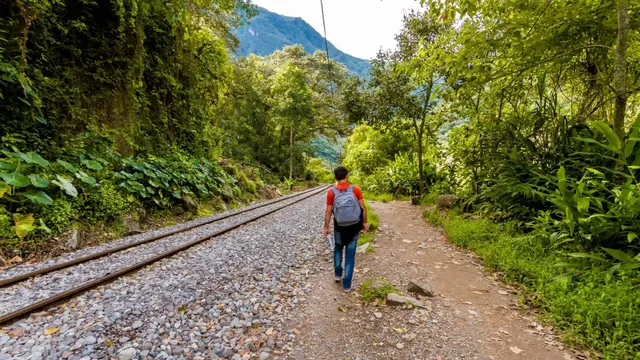
In the morning there’s optional ziplining over the valley. Then you head to Hidroeléctrica and walk about 11 km, almost flat, alongside the railroad tracks and the Vilcanota River, in about 2 h 30 min, to Aguas Calientes. Night in a hotel.
Day 4: Machu Picchu
You go up to the citadel on foot or on the bus to Machu Picchu, take the guided tour and return to Cusco by train or, on the cheapest versions, by walking back to Hidroeléctrica and then by road.
| Day | Main activity | Common optional extras | Overnight |
|---|---|---|---|
| 1 | Bike ride from Abra Málaga to Santa María | Rafting | Santa María or nearby |
| 2 | Hike along an Inca trail to Santa Teresa | Cocalmayo hot springs | Santa Teresa |
| 3 | Hidroeléctrica → Aguas Calientes on foot | Ziplining | Aguas Calientes |
| 4 | Visit to Machu Picchu | Machu Picchu Mountain or Huayna Picchu, with a separate ticket | Cusco |
Important: the Inca Jungle doesn’t automatically include entry to the citadel. Secure your Machu Picchu ticket for day 4 and check whether the return train is included. In high season they sell out before the trip does.
Who is the Inca Jungle for?
- It suits you if: you’re after adventure and variety, would rather sleep in towns than camp or couldn’t get a permit for the Inca Trail.
- It doesn’t suit you if: you don’t feel confident biking on a mountain road, you’re traveling at the height of the rainy season or you want a high-mountain trek.
You don’t need high-altitude trekking experience. The only high part is the start on the bike; the rest of the route runs through low, mild areas, which makes it more manageable than the Salkantay if you’re worried about soroche (altitude sickness). Even so, you go from Cusco to over 4,300 m in a few hours: if you’ve just arrived, acclimatize for a couple of days. More in altitude sickness in Cusco.
Safety on the Inca Jungle
The bike ride is on a road open to traffic, with curves, trucks and, at times, fog or rain. Before you book, ask:
- Whether the bike has disc brakes in good condition and whether you’ll get a helmet, gloves and a reflective vest.
- Whether there’s a support vehicle behind the group, in case you’d rather get off the bike.
- What insurance covers the rafting and ziplining, and whether the equipment for those activities is certified.
Tip: you don’t have to do every activity. If the rafting or ziplining doesn’t appeal to you, skip it: the day still makes sense with the hike and the hot springs.
Best time for the Inca Jungle
From April to October, when the road and the rivers are safer. From November to March, rain can cause landslides on the road to Santa María and Santa Teresa, and rafting may be called off because of how high the river is running. Check Cusco weather by month and leave a buffer day in your trip.
What to bring
- Warm clothes and a rain jacket for the bike descent.
- Light, quick-dry clothing for the jungle.
- Insect repellent: there are lots of mosquitoes in Santa Teresa and Cocalmayo.
- A swimsuit and sandals for the hot springs.
- Comfortable hiking shoes, sunscreen and cash.
Bring a small backpack for the citadel: large luggage won’t get through the entrance check. Review what not to bring to Machu Picchu and the general Cusco packing list.
Summary
The Inca Jungle is the option for anyone who wants to reach Machu Picchu with a dose of adrenaline and without camping. If you prefer high mountains, look at the Salkantay; if you want history along the way, the Inca Trail; and if you’re just looking for the cheapest way to get there on your own, the Hidroeléctrica route.
Frequently asked questions
What is the Inca Jungle trek?
It’s an adventure route to Machu Picchu that combines downhill biking, optional rafting and ziplining, a hike through the cloud forest and hot springs, over 3 or 4 days.
Is the Inca Jungle trek hard?
It’s moderate. The only high part is the start on the bike from Abra Málaga; the hiking takes place in low, mild areas.
Do you need a permit for the Inca Jungle?
No. It has no daily quota, but you need your Machu Picchu ticket for the last day; check whether your operator includes it.
Where do you sleep on the Inca Jungle trek?
In simple guesthouses in Santa María and Santa Teresa, and on the last night in a hotel in Aguas Calientes. There’s no camping.
Is the Inca Jungle trek safe?
The bike ride is on a road with traffic, so you need a helmet, gloves, brakes in good condition and a support vehicle. In the rainy season the risk of landslides goes up.
Which is better, the Inca Jungle or the Salkantay?
The Inca Jungle is sportier and lower; the Salkantay is a high-mountain trek with a 4,630 m pass. Choose based on whether you’re after adrenaline or glaciers.
Official sources
- PeruRail: Hidroeléctrica route perurail.com
- Tu Boleto (Peru’s Ministry of Culture): official Machu Picchu ticket sales tuboleto.cultura.pe

How we put this guide together
Written by Paul Pumalloclla · 17 years in tourism
- Official sources Prices, opening hours and rules checked against Peru’s Ministry of Culture, SERNANP, PromPerú and the train and bus operators.
- Sources cited Every guide links to the sources we used at the end.
- Always up to date When a rule changes, we update the guide and its date.
We’re not a travel agency: we don’t sell tours or take bookings. If a link belongs to a commercial partner, we label it next to the link, and that never changes the facts or the recommendations.
Guide history
- Published
- Last reviewed
Spotted something out of date?
Let us know and we’ll check it against the official source.
Report a change