Key facts
- Cusco is a city in southeastern Peru, in the Andes, the former capital of the Inca Empire and a World Heritage Site since 1983.
- Cusco and Cuzco are both correct spellings; in Peru the official one is Cusco, and in Quechua it’s written Qosqo.
- It sits at about 3,399 m (11,152 ft): rest on the first day and save the trips above 4,000 m for last.
- You get there from Lima on a flight of about 1 h 15 min or a bus ride of about 21 hours; there are also direct flights from Arequipa, Juliaca, Puerto Maldonado and Ayacucho.
- Alejandro Velasco Astete Airport (CUZ) is about 5 km from the center; the new Chinchero airport was 40% complete in March 2026 and is expected to open in 2027.
- The Inca sites in the city and the Sacred Valley are visited with the Cusco Tourist Ticket; Machu Picchu has its own ticket.
Cusco is a city in southeastern Peru, in the Andes, at about 3,399 meters (11,152 feet) above sea level. It was the capital of the Inca Empire, it’s now a UNESCO World Heritage Site, and Peru’s Constitution recognizes it as the country’s historical capital. It’s also the base for visiting Machu Picchu, the Sacred Valley and the mountains of the region, and one of the liveliest cities in the Andes.
What Is Cusco?
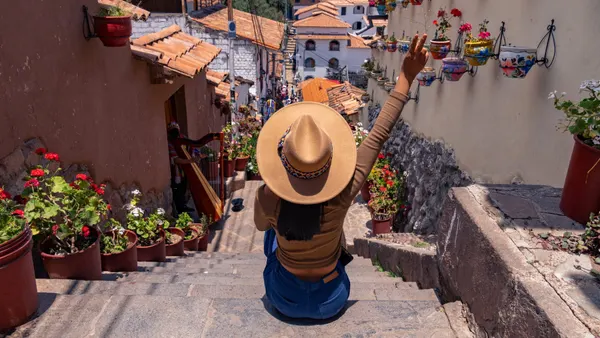
Cusco is a city, a province and a region of Peru all at once. When travelers say “I’m going to Cusco,” they almost always mean the city: a historic center of narrow streets where polished Inca stone walls support colonial mansions, churches and convents. That blend, visible on almost every corner, is what sets it apart from any other city in South America.
The Cusco region is much bigger than the city. It includes the Sacred Valley of the Incas, Machu Picchu, the Vilcanota and Vilcabamba mountain ranges, with snowcapped peaks such as Ausangate and Salkantay, and slopes dropping down toward the cloud forest. That’s why the city works as a base camp: you sleep in Cusco and head out in a different direction each day.
For travelers, Cusco is three things at once:
- A destination in its own right: the historic center, the Qorikancha, San Blas, the Cathedral and the Inca sites in the hills are enough for two or three days.
- The gateway to Machu Picchu: trains and hiking routes to the citadel leave from here, or from the Sacred Valley.
- The place to acclimatize: before any high-mountain hike, it’s wise to spend a few days in the city.
Cusco at a Glance
- Population: the Cusco region had 1,379,000 inhabitants in INEI’s 2025 National Censuses. The city spreads across several districts; the most populous are San Sebastián, with 124,000 people, and the Cusco district itself, with 97,000.
- Official languages: Spanish and, in the areas where it predominates, Quechua, under Article 48 of the Constitution. In Cusco you’ll hear Quechua in markets, rural communities and festivals.
- Time zone: official Peruvian time, five hours behind Greenwich Mean Time (UTC−5). It’s the same as in Lima.
- Airport: Alejandro Velasco Astete, code CUZ, inside the city.
Cusco or Cuzco? How to Spell It
Both spellings are correct. The Royal Spanish Academy accepts Cusco and Cuzco: Peru prefers Cusco, the official spelling and the one used in the Constitution; outside Peru, especially in Spain and in historical texts, Cuzco is still very common. There’s also the Quechua form, Qosqo or Qusqu, which you’ll see on signs, in the names of local institutions and at the city government itself.
The spelling with a z is the one used by colonial-era chroniclers and documents, which is why it appears in history books and in many foreign languages. The spelling with an s took hold in Peru in recent decades because it’s closer to the Andean pronunciation of the name. The airport code, CUZ, is a reminder of the old spelling.
What Does Cusco Mean?
The best-known explanation is that Cusco means “navel” in Quechua. It was spread by the chronicler Inca Garcilaso de la Vega in the 17th century, and it fits the idea of the city as the center of Tahuantinsuyo, the empire of the four suyos, or regions, that radiated out from its main square. That’s why it’s still called “the navel of the world.”
Linguists suggest a different origin. Peruvian scholar Rodolfo Cerrón-Palomino argues that the name comes from Aymara, not Quechua: qusqu would refer to a type of owl, and the full place name would be something like “the stone where the owl landed.” He links it to the founding myth of the Ayar brothers, in which one of them, Ayar Auca, turns to stone on reaching the valley to take possession of the land.
Both readings coexist: the “navel” is the one you’ll hear from almost every guide and part of Cusco’s identity; the owl is the one backed by linguistic studies. Neither changes the essentials: for the Incas, this valley was the center of their world.
Where Is Cusco?
Cusco is in southeastern Peru, high in the Andes, in the Huatanay River valley. It’s about 1,100 km (680 miles) from Lima by road and about 1 h 15 min away on a direct flight. To the north, about 48 minutes away, the Sacred Valley begins; to the northwest lies Machu Picchu, which can’t be reached by a direct road.
- From Lima: by plane, about 1 h 15 min; by bus, 20 to 22 hours. Every option in how to get from Lima to Cusco.
- To Machu Picchu: train to Aguas Calientes, about 3 h 30 min, and a 25-minute bus ride to the citadel, or a hiking route. Read how to get to Machu Picchu.
- To the Sacred Valley: Pisac is about 32 km away (48 minutes) and Ollantaytambo 72 km (1 h 45 min).
- To Lake Titicaca and Arequipa: by road or by train to Puno, on a full-day journey.
Cusco Elevation
Cusco’s elevation is about 3,399 m above sea level at the Plaza de Armas. Hillside neighborhoods such as San Blas are around 3,450 m, and the Inca sites in the hills, from Qenqo to Tambomachay, sit between about 3,600 and 3,805 m. It’s one of the highest cities in the world to receive mass tourism, and almost everyone flies in from sea level.
At that altitude, air pressure is about two-thirds of what it is on the coast, so each breath takes in less oxygen. That’s why it’s common to feel short of breath on stairs, to get a headache or to feel tired on the first day. This is what’s known as soroche, or altitude sickness.
| Place | Approximate elevation | Compared with Cusco |
|---|---|---|
| Machu Picchu | 2,430 m | Almost 1,000 m lower |
| Sacred Valley (Urubamba) | 2,870 m | About 500 m lower: ideal for acclimatizing |
| Cusco, Plaza de Armas | 3,399 m | — |
| San Blas neighborhood | 3,450 m | A bit higher, with steep hills |
| Sacsayhuamán | About 3,600 m | About 200 m higher |
| Tambomachay | 3,805 m | The highest point of the hillside circuit |
| Humantay Lake | 4,200 m | A day trip for once you’re acclimatized |
| Rainbow Mountain | 5,036 m | The most demanding: save it for last |
Important: if you fly in from Lima, rest on the first day, walk slowly and avoid alcohol and heavy meals. A good strategy is to head straight down to the Sacred Valley and leave the city for later. If you have a heart or respiratory condition or are pregnant, talk to your doctor before the trip. All the details are in our guide to altitude sickness in Cusco.
History of Cusco
Cusco’s history can be read in its walls: Inca stone below, colonial adobe and tile above. These are the moments worth knowing before you explore it.
The Capital of the Incas
According to tradition, the city was founded by Manco Cápac and Mama Ocllo, or by the Ayar brothers, depending on the version of the myth, when they reached the valley from the south. What began as a local chiefdom became, from the 15th century on and under the Inca Pachacútec, the capital of an empire that came to span much of the Andes, from present-day Ecuador to Chile.
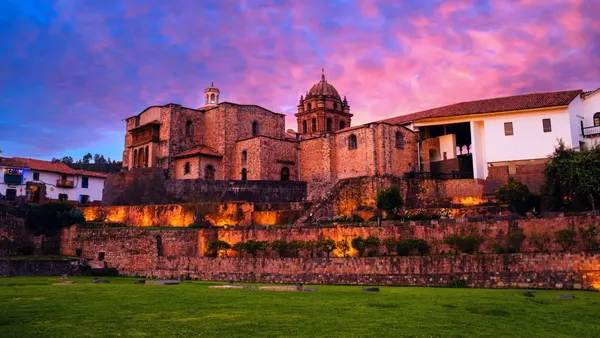
Pachacútec and his successors reorganized the city with palaces, temples and large plazas, channeled the rivers and built Sacsayhuamán on the northern hill. From the main square, the Huacaypata, roads ran out to the four suyos. The most important temple was the Qorikancha, the enclosure of the Sun, covered in gold according to the chroniclers. You can visit it today: read our Qorikancha guide.
The Conquest and the Colonial City
Francisco Pizarro entered Cusco in late 1533, and on March 23, 1534, he carried out the Spanish founding of the city, a date Cusco celebrates every year. The Spaniards divided the Inca palaces among the conquistadors and built on top of their foundations: the clearest example is the Convent of Santo Domingo, raised on the walls of the Qorikancha.
During the viceroyalty, Cusco was a major artistic center. Its workshops produced the Cusco School of painting, with saints and virgins with Andean features and plenty of gold leaf, which still fills the city’s churches.
The Earthquakes of 1650 and 1950
Two major earthquakes left their mark on the city. The 1650 quake destroyed many of the colonial buildings, which were rebuilt with the Baroque look we see today. The 1950 quake damaged churches and mansions again and exposed Inca walls that had been hidden for centuries, such as those of the Qorikancha. Both times, the Inca stonework held up much better than what was built on top of it.
World Heritage Site and Historical Capital
UNESCO added the City of Cusco to the World Heritage List in 1983, the same year as the Machu Picchu Historic Sanctuary. Article 49 of Peru’s 1993 Constitution states that Lima is the capital of the Republic and that the city of Cusco is its historical capital.
The Cusco Flag
The Cusco flag has seven horizontal stripes in the colors of the rainbow: red, orange, yellow, green, light blue, blue and violet. You’ll see it on balconies, in the Plaza de Armas and at every festival. Since 2021, under municipal ordinance 08-2021, the official version of the Provincial Municipality of Cusco carries the city’s coat of arms in the center, a golden sun known as the Sol de Echenique, although many locals still fly the flag without it.
It looks like the LGBT pride flag, but it’s not the same: Cusco’s has seven colors and includes light blue. If you see rainbows everywhere, it’s not a campaign: it’s the city flag.
Plaza de Armas of Cusco
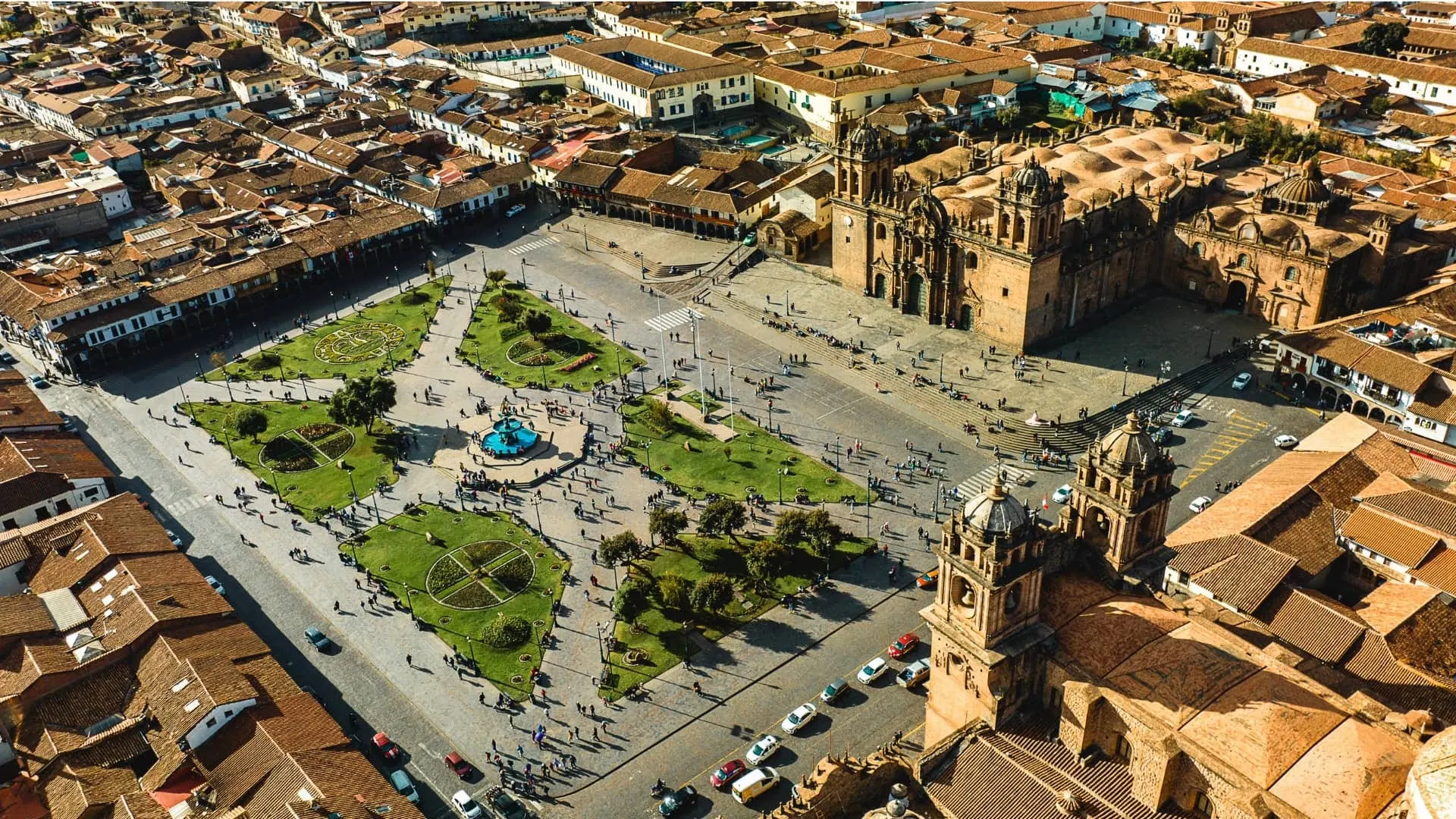
The Plaza de Armas occupies part of the old Huacaypata, the great Inca ceremonial square. Today it’s surrounded by colonial arcades, the Cathedral and the Church of the Society of Jesus (La Compañía), and it’s the starting point for exploring the whole center on foot. At night, lit up, it’s one of the city’s loveliest walks. It’s also the setting for processions, parades and one of the scenes of Inti Raymi, every June 24.
Cusco Neighborhoods: What Each Area Is Like
The historic center is compact, and almost everything of interest is less than 20 minutes on foot from the Plaza de Armas. What changes from one neighborhood to the next is the atmosphere, the noise and, above all, the hills.
| Area | What it’s like | Best for |
|---|---|---|
| Plaza de Armas and surroundings | The tourist heart: restaurants, travel agencies, churches and pedestrian streets. Flat and lively. | First visits and short stays |
| San Blas | The artisans’ quarter: steep streets, workshops, cafés, small bars and viewpoints. | Travelers after a bohemian vibe who don’t mind hills |
| San Cristóbal | A hillside neighborhood between the Plaza and Sacsayhuamán, with views and stairways. | Views and quiet, if you’re in good shape |
| San Pedro and Santa Ana | Everyday Cusco, next to San Pedro Market. Less touristy. | Budget travelers |
| Avenida El Sol and Wanchaq | A more modern area, with banks, shops and a quick ride to the airport. | Those who put convenience and transportation first |
San Blas is the most photogenic neighborhood and worth a visit even if you don’t stay there: the church with its carved pulpit, the workshops of religious image makers and the viewpoint over the rooftops. Read our guide to the San Blas neighborhood.
Tip: if you arrive with little acclimatization or are traveling with older adults, choose lodging on a flat street near the Plaza de Armas or Avenida El Sol. Climbing up to San Blas or San Cristóbal every night is much harder than it looks on the map.
What to See in Cusco
The must-sees fall into two areas: the historic center, which you can explore on foot in a day, and the Inca sites in the hills, which take half a day. You’ll find the time needed, admission and best time for each place in our guide to things to do in Cusco; here’s the big picture.
In the Historic Center
- Plaza de Armas, the Cathedral and La Compañía: colonial art and the Cusco School.
- Qorikancha: the Inca Temple of the Sun beneath the Convent of Santo Domingo.
- Hatun Rumiyoc Street: the Inca wall with the Twelve-Angled Stone.
- San Blas: workshops, cafés and viewpoints.
- San Pedro Market: fruit juices, set lunches and everyday Cusco.
In the Hills, on the Outskirts
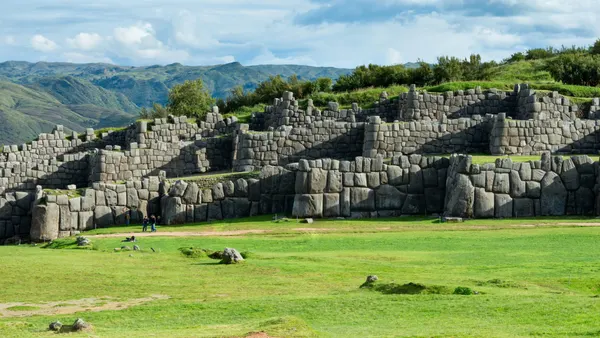
- Sacsayhuamán: the zigzag walls with giant blocks, about 2 km from the Plaza.
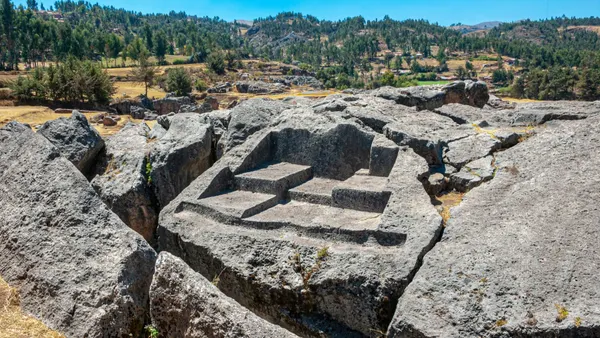
- Qenqo: a carved rock with an underground altar and a ceremonial channel.
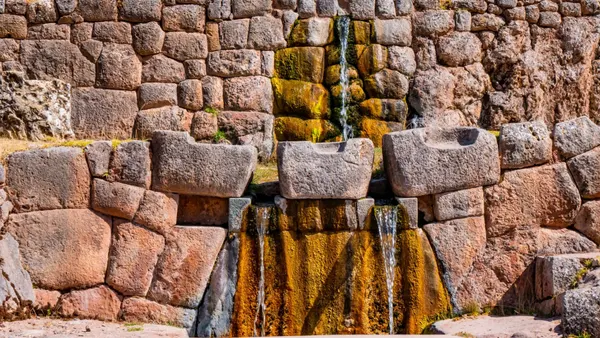
- Puka Pukara and Tambomachay: an Inca checkpoint and the fountains of the “Bath of the Inca,” about 7.5 km along the road to Pisac.
You can visit the four hillside sites on your own: take a taxi to Tambomachay and walk back downhill. There are also half-day city tours that combine them with the Qorikancha.
Day Trips from Cusco
- Sacred Valley: Pisac, Ollantaytambo and Chinchero, lower and milder. Read our guide to the Sacred Valley of the Incas.
- Machu Picchu: on a long day or, better, over two days with a night in Aguas Calientes. All the information is in our Machu Picchu guide.
- Rainbow Mountain and Humantay Lake: the two big high-mountain outings, leaving before dawn.
- Maras and Moray, and the South Valley: half days with great scenery and less crowded sites.
Cusco Museums
Cusco’s museums help you make sense of what you see in the streets: Inca pottery and metalwork, Cusco School painting and Andean folk art. Almost all of them are a few blocks from the Plaza de Armas, in colonial mansions built on top of Inca walls. Some are included in the Cusco Tourist Ticket and others charge their own admission. The table follows Cosituc’s official list and PromPerú’s guide.
| Museum | What you’ll see | Admission |
|---|---|---|
| Museo Inka (Casa del Almirante) | The city’s oldest museum, founded in 1848 and part of the National University of San Antonio Abad (UNSAAC) since 1919: pottery, gold and silverwork, textiles and mummies. | Separate ticket |
| Machu Picchu Museum, Casa Concha | The pottery, stone and metal objects Hiram Bingham found at Machu Picchu and Yale University returned. It’s run by UNSAAC. | Separate ticket |
| Museum of Pre-Columbian Art | About 450 pieces dating from 1250 BC to AD 1532, in eleven rooms of a mansion on Plazoleta Nazarenas. | Separate ticket |
| Qorikancha Site Museum | The museum of the archaeological site of the Temple of the Sun. It’s not the same as the Santo Domingo church and convent. | Tourist Ticket |
| Santo Domingo Church (Qorikancha) | The Inca walls of the Temple of the Sun and a gallery of 17th- and 18th-century paintings. | Separate ticket |
| Cathedral | Built on the palace of the Inca Wiracocha, it holds a large collection of Cusco School canvases and embossed silverwork. | Separate ticket |
| Museum of Religious Art | In the former palace of Inca Roca, next to the Twelve-Angled Stone: more than 200 Cusco School works, including part of the Corpus Christi series. | Separate ticket |
| Regional History Museum | In the house of Inca Garcilaso de la Vega: pre-Hispanic, colonial and republican pieces. | Tourist Ticket |
| Museum of Contemporary Art | In the city hall building on Plaza Regocijo: Peruvian and foreign artists of the 20th and 21st centuries. | Tourist Ticket |
| Museum of Popular Art | Work by the region’s artisans, with masks and miniatures of the Paucartambo dances and photos of old Cusco. | Tourist Ticket |
| Pachacútec Monument | A nine-level tower that serves as the base for the Inca’s bronze statue, with a panoramic view from the top. | Tourist Ticket |
| Centro Qosqo de Arte Nativo | A daily show of regional music and dance, with a room of traditional costumes and instruments. | Tourist Ticket |
| Santa Catalina Museum | Colonial canvases, textiles and altarpieces, with paintings by Diego Quispe Tito, in the convent built over the former Acllahuasi. | Separate ticket |
If you only have time for two, the Museo Inka and Casa Concha complement each other: the first tells the Inca story from Cusco’s point of view and the second shows what was found at Machu Picchu. Visit them before going to the citadel and you’ll understand it better. Not all of them open on weekends and hours change, so check before you go. How the ticket’s museums are split into circuits is explained in our guide to the Cusco Tourist Ticket.
How to Get to Cusco
Almost every traveler arrives in Cusco by plane, because everything is far by road: Lima is a full day away by bus, and Arequipa or Puno half a day. These are the reference times from PromPerú’s practical guide to Cusco.
Getting to Cusco: hours by plane and by road
- Plane
- Bus or car
- Lima · 1,105 km via Abancay
- Plane1 h 15 min
- Bus or car21 h
- Arequipa · 515 to 610 km
- Plane1 h
- Bus or car10 h
- Puerto Maldonado · 463 km
- Plane55 min
- Bus or car10 h
- Puno · 389 km
- Plane (from Juliaca)55 min
- Bus or car7 h
| From | Plane (direct flight) | Bus or road |
|---|---|---|
| Lima | 1 h 15 min | 1,105 km and about 21 h via Abancay; 1,650 km and about 26 h via Arequipa |
| Arequipa | 1 h | Between 515 and 610 km, about 10 h |
| Puno (Lake Titicaca) | No airport: you fly to Juliaca | 389 km, about 7 h |
| Juliaca | 55 min | On the Cusco–Puno highway |
| Puerto Maldonado | 55 min | 463 km, about 10 h |
| Ayacucho | 55 min | — |
By Plane: Alejandro Velasco Astete Airport (CUZ)
Teniente FAP Alejandro Velasco Astete International Airport, code CUZ, is run by Corpac. It’s in the Wanchaq district, about 5 km (3 miles) from the city center according to the airport’s fact sheet, so you land practically in Cusco. There are direct flights from Lima, Arequipa, Juliaca, Puerto Maldonado and Ayacucho. If you’re coming from abroad, you’ll normally connect in Lima: check the Peru entry requirements first.
Since the airport sits at about 3,310 m (10,860 ft), acclimatization starts as soon as you step off the plane: walk slowly, pick up your bags without rushing and keep your first day free of exertion.
By Road from Lima, Arequipa and Puno
There are two routes from Lima. The Abancay route is the shortest, about 1,105 km and around 21 hours; the Arequipa route covers about 1,650 km and 26 hours, but lets you stop on the coast and in Arequipa. From Arequipa it’s between 515 and 610 km (PromPerú’s Cusco and Arequipa guides disagree) and about 10 hours, and from Puno, 389 km and about 7 hours. Long-distance buses arrive at the city’s bus terminal.
Each route has its own guide: how to get from Lima to Cusco, Arequipa and the Colca from Cusco and Lake Titicaca from Cusco, including the train from Puno. For Puerto Maldonado and the rainforest, read the Amazon from Cusco.
The New Chinchero Airport
Chinchero International Airport is being built in the Chinchero district, in Urubamba province; the town of Chinchero is about 30 km from Cusco, around 35 minutes by car according to Mincetur. On March 31, 2026, Peru’s Ministry of Transport and Communications (MTC) reported that the works were 40% complete and that it expected the airport to start operating in 2027. In June 2026, the MTC itself estimated that the physical works would be finished in the second half of 2028, with operational testing running into early 2029. It will handle up to 12 million passengers a year. Announced dates have shifted before, so until it opens, all flights keep landing at Velasco Astete.
Getting Around Cusco
The historic center is best explored on foot: many streets are narrow, cobbled or pedestrian-only, and walking is usually the fastest way to get from one museum to the next. What wears you out isn’t the distance but the altitude and the hills, so take it slow on your first day.
- On foot: the Plaza de Armas, the Qorikancha, San Blas, San Pedro Market and almost all the museums are close to one another. Sacsayhuamán is about 2 km away: 30 to 40 minutes on foot, uphill, or about 10 by taxi.
- Taxis and ride-hailing apps: the most practical way to go up to the hills or to the bus terminal, the train station or the airport. Order a taxi through an app, by phone or from your hotel, and don’t hail one on the street. Taxis have no meters: if you’re not using an app, agree on the fare before getting in.
- From the airport to the center: the simplest option is a taxi ordered through an app or a transfer arranged by your hotel. The ride is short, but rush-hour traffic makes it longer.
- City buses: Cusco has buses and minibuses (combis) on fixed routes with cheap fares, useful for residential neighborhoods. You don’t need them to get around the center, and they’re often packed.
- To the Sacred Valley: shared vans (colectivos) and buses leave from stops a few blocks from the center for Pisac, Calca, Urubamba and Ollantaytambo.
More tips for getting around safely, day and night, in our guide to safety in Cusco. And if you’ll be paying for taxis and markets in cash, read our guide to money in Peru.
Cusco Tourist Ticket and Admission
Almost all the archaeological sites in Cusco and the Sacred Valley, including Sacsayhuamán, Qenqo, Puka Pukara and Tambomachay, can only be visited with the Cusco Tourist Ticket (Boleto Turístico del Cusco): individual tickets aren’t sold. The full ticket covers 16 sites over 10 days. Left out, each with its own admission fee, are the Cathedral, the Qorikancha temple, the churches on the religious circuit, the Maras salt mines and Machu Picchu. Prices, circuits and how to buy it in our guide to the Cusco Tourist Ticket.
Weather and the Best Time to Visit Cusco
In Cusco, people don’t talk about summer and winter but about the dry season and the rainy season. The dry season, from May to September, brings sunny days and freezing nights, which drop below zero on the outskirts in June and July. The rainy season, from December to March, brings showers almost every day, especially in the afternoon, and very green landscapes. April, October and November are transition months, with good weather and fewer people.
The daily high barely changes through the year, between 20 and 22 °C (68 and 72 °F): what varies is the nighttime cold and the rain. That’s why the rule is to dress in layers all year round. You’ll find the month-by-month table in Cusco weather and the packing list in our Cusco packing list.
Tip: if your dates are flexible, April, May, September and October offer the best balance between good weather, ticket availability and prices. June, July and August are the most in-demand months, with Inti Raymi in late June.
Cusco Food and Drinks
Cusco eats hearty: chiri uchu, oven-roasted guinea pig (cuy), adobo, chicharrón, roast suckling pig (lechón) or hen soup (caldo de gallina). To drink, the classics are coca tea, which your hotel will offer you for the altitude; chicha morada, a nonalcoholic purple corn drink; chicha de jora, a fermented, mildly alcoholic corn beer served in picanterías; and frutillada, its strawberry version. What to order and where in our guide to Cusco food.
Cusco at Night
After sunset the center stays lively: the Plaza de Armas lit up, the Inca wall of the Qorikancha illuminated, traditional dances at the Centro Qosqo de Arte Nativo, peñas with Andean music and the bars of San Blas. Bring a warm layer, because the temperature drops fast. Ideas and safety tips in Cusco at night.
How Many Days to Spend in Cusco
With four or five days you can see the city, the Sacred Valley and Machu Picchu without rushing. If you also want to do Rainbow Mountain, Humantay or a trek, add two days. A basic breakdown:
- 3 days: the city and the hills, the Sacred Valley with a night in Ollantaytambo or Aguas Calientes, and Machu Picchu.
- 5 days: all of the above plus a high-mountain day trip and a relaxed day in San Blas and the market.
- 7 days: add Maras and Moray, the South Valley or a short trek.
You’ll find day-by-day plans in our 3-, 5- and 7-day Cusco itinerary.
Next Step: How to Plan Your Trip to Cusco
The order that works best is: set your Machu Picchu date, book a morning arrival flight, decide whether to sleep in the Sacred Valley first to acclimatize, and divide the rest of your days between the city and day trips. Once that’s clear, everything else falls into place.
- First visit, few days: the historic center and the hills, the Sacred Valley and Machu Picchu.
- Worried about the altitude: start in the valley and save the mountains for last.
- Into history: the Qorikancha, Sacsayhuamán and the hillside sites before Machu Picchu, so you understand what you’ll see there.
- Looking for nightlife and atmosphere: stay near San Blas and save a night for a peña.
Frequently asked questions
Is it spelled Cusco or Cuzco?
Both spellings are correct according to the Royal Spanish Academy. Peru uses Cusco, the official spelling; Cuzco is the traditional form, more common outside the country. In Quechua it’s written Qosqo.
What does Cusco mean?
It’s traditionally translated as the “navel” of the world, following Inca Garcilaso de la Vega. Linguist Rodolfo Cerrón-Palomino proposes an Aymara origin related to an owl and to the myth of the Ayar brothers.
Where is Cusco?
In southeastern Peru, in the Andes mountains, in the Huatanay River valley. It’s about 1,100 km from Lima by road and is the base city for visiting Machu Picchu and the Sacred Valley.
What is the elevation of Cusco?
The Plaza de Armas sits at about 3,399 m (11,152 ft) above sea level. The hillside neighborhoods and the Inca sites in the hills are above 3,450 m, so it’s wise to acclimatize for a day or two before exerting yourself.
What does the Cusco flag look like?
It has seven stripes in the colors of the rainbow, including light blue. Since municipal ordinance 08-2021, the official version carries the city’s coat of arms, the Sol de Echenique, in the center.
Why is Cusco the historical capital of Peru?
Because it was the capital of the Inca Empire. Article 49 of the 1993 Constitution states that Lima is the capital of the Republic and that the city of Cusco is its historical capital.
How many days do I need in Cusco?
Four to five days to see the city, the Sacred Valley and Machu Picchu without rushing. Add two days if you want to do Rainbow Mountain, Humantay Lake or a trek.
How do you get to Cusco from Lima?
By plane, on a direct flight of about 1 h 15 min. By road it’s about 1,105 km via Abancay, around 21 hours by bus, or about 1,650 km and 26 hours via Arequipa, according to PromPerú.
How far is Cusco airport from the city center?
Alejandro Velasco Astete Airport (CUZ) is in the Wanchaq district, about 5 km (3 miles) from the city center according to Corpac. The taxi ride is short, though rush-hour traffic makes it longer.
Which museums should I visit in Cusco?
The Museo Inka and the Machu Picchu Museum at Casa Concha, both run by UNSAAC, for Inca history; the Cathedral and the Museum of Religious Art for the Cusco School; and the Museum of Pre-Columbian Art. The Regional History Museum, the Qorikancha Site Museum and the Centro Qosqo de Arte Nativo are included in the Tourist Ticket.
Is Cusco safe?
Yes, with the usual precautions of any tourist city: don’t hail taxis on the street, watch your belongings in crowded places and keep an eye on your drink at night. You’ll find all the tips in our guide to safety in Cusco.
What are the typical drinks in Cusco?
Coca tea; chicha morada, a nonalcoholic purple corn drink; and chicha de jora, a fermented, mildly alcoholic corn beer served in picanterías, along with its strawberry version, frutillada.
Official sources
- UNESCO: City of Cuzco, World Heritage List whc.unesco.org
- Cosituc: Cusco Tourist Ticket fares and included sites cosituccusco.pe
- SENAMHI: Peru’s climate data senamhi.gob.pe
- PromPerú: Cusco practical travel guide (2023): getting there by land and air, distances and museums repositorio.promperu.gob.pe
- Congress of Peru: official Peruvian time, five hours behind GMT www3.congreso.gob.pe

How we put this guide together
Written by Paul Pumalloclla · 17 years in tourism
- Official sources Prices, opening hours and rules checked against Peru’s Ministry of Culture, SERNANP, PromPerú and the train and bus operators.
- Sources cited Every guide links to the sources we used at the end.
- Always up to date When a rule changes, we update the guide and its date.
We’re not a travel agency: we don’t sell tours or take bookings. If a link belongs to a commercial partner, we label it next to the link, and that never changes the facts or the recommendations.
Guide history
- Published
- Last reviewed
Spotted something out of date?
Let us know and we’ll check it against the official source.
Report a change