Key facts
- San Blas is Cusco’s artisans’ quarter, with steep streets, workshops, cafés and viewpoints.
- It’s about a five-minute walk from the Plaza de Armas, up Hatun Rumiyoc and the Cuesta de San Blas.
- It sits at around 3,450 m: if you’ve just arrived in Cusco, climb slowly.
- The streets, the square and the viewpoint are free; the church charges admission, separate from the Tourist Ticket.
- The church, famous for its cedar pulpit, reopened fully restored in December 2023, with 16th-century murals uncovered.
- On the way, on Hatun Rumiyoc Street, is the Twelve-Angled Stone, an Inca block weighing about six tonnes.
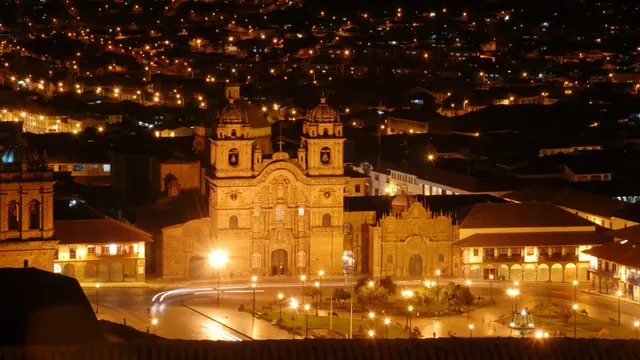
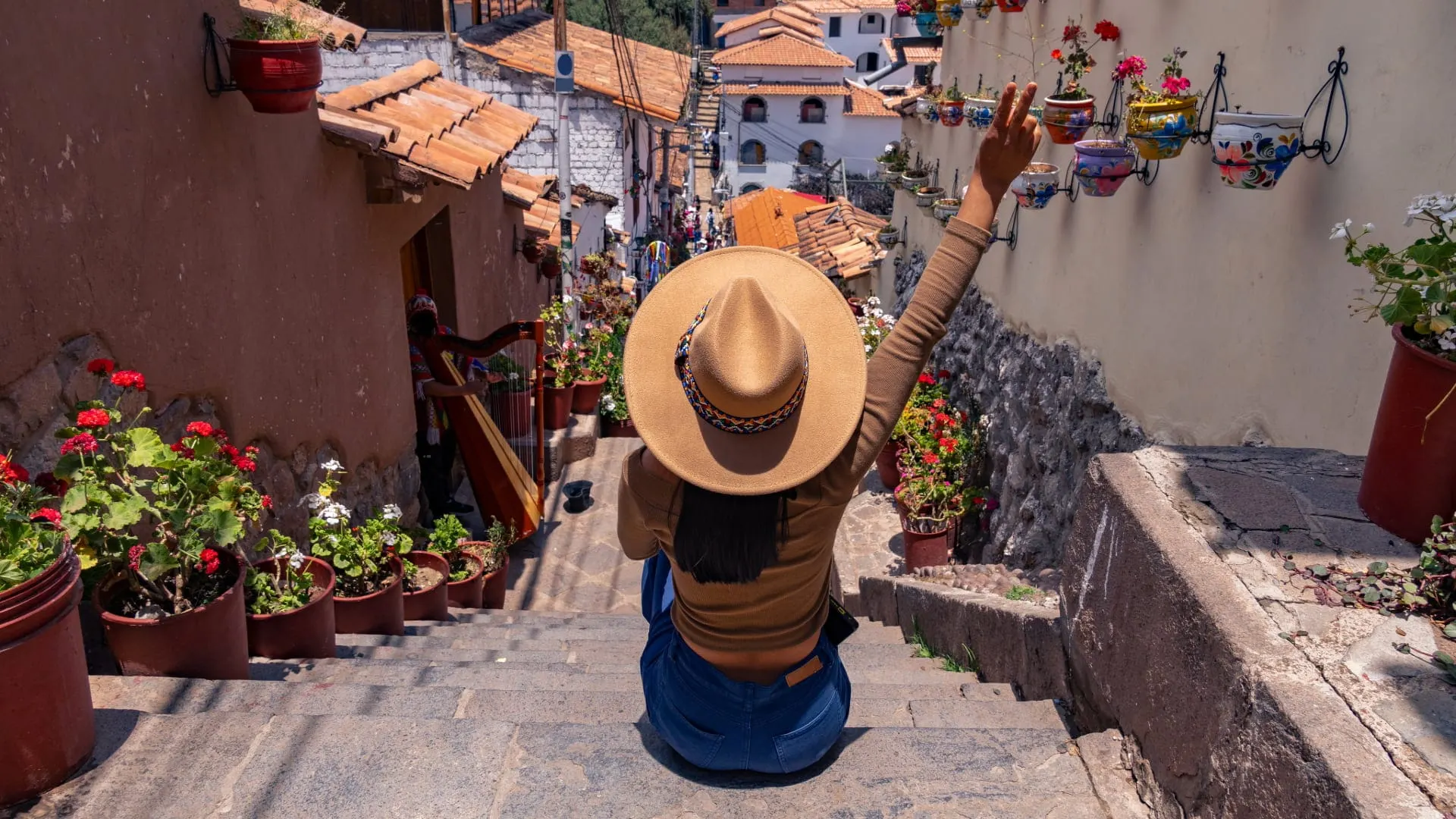
San Blas is Cusco’s artisans’ quarter: steep cobblestone streets, whitewashed houses with blue balconies, workshops of religious image makers, cafés and viewpoints over the city’s rooftops. It’s about a five-minute uphill walk from the Plaza de Armas, at around 3,450 m. Its square and its church, with a famous pulpit carved from cedar wood, are the heart of the neighborhood; strolling the streets is free.
San Blas Neighborhood in Cusco: What It Is and Why Visit
San Blas is one of the oldest neighborhoods in the historic center of Cusco. In Inca times, according to tradition, this was the T’oqokachi sector, on the hillside northeast of the great square. After the conquest, the Spaniards founded one of the first parishes for the Indigenous population here and named it San Blas (Saint Blaise), the name it still bears today.
Over the centuries it became the neighborhood of artists and artisans: religious image makers, altarpiece carvers, potters and silversmiths. Some local families, such as the Mendívils, the Olaves and the Méridas, made a distinctive style of religious and folk figures famous. Today those workshops share the streets with galleries, cafés, guesthouses and small bars, and the atmosphere is quieter and more bohemian than around the Plaza de Armas.
It’s worth it for three reasons: it’s the most photogenic corner of the city, it has the best handcrafted art and it offers the prettiest views over the red-tiled rooftops.
History of San Blas: From Tococachi to Colonial Parish
The Cusco-born chronicler Inca Garcilaso de la Vega describes the neighborhoods that ringed Inca Cusco in his Comentarios reales (Royal Commentaries of the Incas). To the east he places “another very large neighborhood, called Tococachi.” He translates the parts of the name himself (toco means window and cachi is table salt), but admits he doesn’t know what the whole means. That’s why it pays to be wary of the translations you’ll see around, such as “salt cave.” Garcilaso adds another detail: the convent of San Francisco first stood in this neighborhood.
UNESCO, which inscribed the City of Cuzco on the World Heritage List in 1983, sums up what happened next: the Spaniards kept the basic structure of the Inca city but built churches and palaces over its ruins. San Blas shows this on a neighborhood scale: old street layouts, colonial mansions and a parish church that organized local life.
That parish carried weight in the city’s religious life. In the series of Corpus Christi canvases painted in Cusco in the late 17th century, one of the paintings, dated around 1674–1680, shows the float of the San Blas parish in the procession; today it’s held in the Larraín Peña Collection in Santiago, Chile. The custom lives on: the image of San Blas is one of the fifteen that leave their parishes to accompany the monstrance during Corpus Christi in Cusco.
How to Get to San Blas from the Plaza de Armas
You get there on foot. Leave the Plaza de Armas along Calle Triunfo, next to the Cathedral, and continue straight onto Hatun Rumiyoc Street, the one with the Inca wall and the Twelve-Angled Stone. At the end begins the Cuesta de San Blas, a steep street with steps that leads to the little square and the church.
- Plaza de Armas to Hatun Rumiyoc: two or three minutes, on flat ground.
- Hatun Rumiyoc: stop for a moment at the Twelve-Angled Stone.
- Cuesta de San Blas: the steepest stretch; take it slowly.
- Plazoleta de San Blas: you reach the church, the fountain and the workshops.
Important: San Blas is a bit higher than the Plaza de Armas and the hills are steep. If you’ve just arrived in Cusco, climb slowly, stop whenever you need to and save the visit for your second day if you have a headache or feel short of breath. More tips in our guide to altitude sickness in Cusco.
What to See in San Blas
Hatun Rumiyoc Street and the Twelve-Angled Stone
Hatun Rumiyoc Street, about 200 m from the Plaza de Armas, is the gateway to the neighborhood. One side of it is the wall of the palace of Inca Roca, the sixth ruler of the dynasty. After the conquest, the Archbishop’s Palace and the Museum of Religious Art were built on top of it, and both still operate there. As part of that palace, the wall has been a Historic Monument since 1972.
The star piece is the Twelve-Angled Stone: a block of diorite about two meters long and weighing around six tonnes, carved with twelve edges that lock into the neighboring stones. The same wall has blocks cut with five, six and seven angles, less famous but just as precise. Some scholars suggest that the twelve angles allude to the division of Cusco’s nobility into 24 panacas (royal lineages), twelve in Hanan Cusco and twelve in Hurin Cusco; it’s a hypothesis, not a proven fact.
Important: in February 2025 a man struck the stone with a blunt object and, according to the Andina news agency, the damage may be irreversible. Look at it and photograph it, but don’t touch it, don’t lean on the wall and don’t let children climb on it.
San Blas Square and Plazoleta
The San Blas square is the neighborhood’s meeting point: a sloping open space with a stone fountain and the church on one side. Around it are workshops, craft shops and cafés with balconies. It’s a good place to sit and watch neighborhood life go by.
San Blas Church and Its Pulpit
San Blas Church is a plain temple on the outside that hides one of the great works of Cusco colonial art: a Baroque pulpit carved from cedar wood, with dozens of figures of saints, angels and plant motifs. Tradition attributes it to the Indigenous artist Juan Tomás Tuyru Túpac, although its authorship isn’t documented with certainty, and a popular legend claims that its maker’s skull is kept inside it.
The church underwent a full restoration by Peru’s Ministry of Culture between 2020 and 2023, which covered its walls and roof, nine altarpieces, mural paintings and the pulpit itself. It was handed back fully restored in December 2023.
The figures from that project, according to the Decentralized Directorate of Culture of Cusco, give an idea of what the church holds. Besides the foundations, walls, roof, doors and windows, the team restored mural painting in 12 sections, 202 m² in all, 80 easel paintings, 51 polychrome sculptures and 25 carved and gilded frames. The investment topped S/ 5.8 million.
The big surprise came in 2022. While taking down canvases and gilded frames in the presbytery, restorers found two sections of large-format mural painting from the late 16th century, part of the church’s original decoration. They depict the four Evangelists: Mark and John hold a medallion with the monogram of Jesus, and Matthew and Luke hold another with that of the Virgin Mary. An earlier intervention, in 1984, had not uncovered them. When you go in, look for these paintings high up in the presbytery, around the main altar.
The church charges admission, separate from the Cusco Tourist Ticket. For years it was part of the Archdiocese of Cusco’s religious circuit, which has its own ticket; check at the door whether it’s now sold on its own or within that circuit, and the visiting hours, which change on Mass days.
Artisan Workshops
The crafts of San Blas are the neighborhood’s big draw. In the workshops and home studios you’ll see religious images, nativity scenes, portable altarpieces (retablos), ceramics, festival masks and silverwork. Many pieces are one of a kind and made on site, so you can watch the artisans at work. On the square is the home studio of the Mendívil family, known for their long-necked virgins and saints.
The Tradition of the Image Makers
Imaginería, the craft of making religious images, is the neighborhood’s signature. The best-documented case is that of master Hilario Mendívil, who created the long-necked figure style inspired by the llamas, alpacas and vicuñas that came into the old San Blas neighborhood, where people bartered. He died in 1977, and his daughter, Juana Mendívil, went on perfecting the technique alongside her mother, Georgina Dueñas.
In 2025, Peru’s Ministry of Culture named Juana Mendívil a Meritorious Personality of Culture (Personalidad Meritoria de la Cultura). According to El Peruano, her work combines glued cloth, pastes made from different flours, pigments, enamels and gold and silver leaf, and her family is in charge of the traditional Christmas nativity scene in the Plaza de Armas. It’s a good example of how the craft is passed down in San Blas: from parents to children, in the same workshop. If you’re traveling in December, the Santurantikuy, the Christmas folk-art fair held every December 24 in the Plaza de Armas, is the big showcase for this tradition.
San Blas Viewpoint
The San Blas viewpoint (mirador) is in the upper part of the neighborhood, above the little square. You climb the stairways of Calle Pasñapakana to a balcony overlooking the rooftops, the Cathedral and the hills to the south of the city. It’s the best spot in the neighborhood to watch the sunset or the city lighting up at dusk.
Charming Streets
Beyond the square, it’s worth wandering the surrounding streets, such as Tandapata, Carmen Alto and the Cuesta de San Blas itself: stone alleys, stairways, colonial doorways and courtyards full of flowers. This is the area where you best see the Cusco of white houses with wooden doors and balconies painted blue.
San Blas Market
The San Blas market is a small neighborhood market, very close to the square, with stalls selling juices, breakfasts and set lunches. It’s quieter than San Pedro Market and a good stop for a fruit juice mid-morning. If you want to try local dishes, read our guide to Cusco food.
San Blas at a Glance
| What to see | Time | Admission | Best time |
|---|---|---|---|
| Hatun Rumiyoc Street and the Twelve-Angled Stone | 15 to 20 min | Free | Early, before the groups |
| San Blas square and fountain | 20 to 30 min | Free | Mid-morning or afternoon |
| San Blas Church | 20 to 30 min | Paid, separate from the Tourist Ticket | Morning, outside Mass times |
| Artisan workshops | 30 min to 1 h | Free to browse | Mid-afternoon, when the workshops are open |
| San Blas viewpoint | 20 min | Free | Sunset |
| Neighborhood cafés and bars | At your own pace | Depends on what you order | Afternoon and evening |
In all, one to two hours at an easy pace is enough to see the highlights. If you’re into crafts or photography, give it half an afternoon.
San Blas Walking Tour: A Suggested Route
This is the route I suggest for seeing the neighborhood at an easy pace, from the bottom up, and heading back to the center a different way. Start mid-morning, when the church and the workshops are already open, and finish at the viewpoint at sunset if you want to stretch it out.
| Stop | What it is | Tip |
|---|---|---|
| 1. Plaza de Armas and Calle Triunfo | Starting point, next to the Cathedral | Set off early to find Hatun Rumiyoc without the groups |
| 2. Hatun Rumiyoc Street | Wall of Inca Roca’s palace and the Twelve-Angled Stone | Look for the five- to seven-angled blocks too; look, don’t touch |
| 3. Museum of Religious Art | Museum in the former palace, now the Archbishop’s Palace | Separate admission; add it if you’re into colonial painting |
| 4. Cuesta de San Blas | Steep climb with steps up to the little square | Go slowly; the best photos are looking back down |
| 5. San Blas square and fountain | Heart of the neighborhood, ringed by workshops | Sit down and catch your breath before carrying on |
| 6. San Blas Church | Carved pulpit and 16th-century murals | Go in outside Mass times, and quietly |
| 7. Image makers’ workshops | Home studios where the pieces are made | Ask before photographing anyone at work |
| 8. Tandapata and the Pasñapakana stairways | Stone alleys climbing to the upper part | Shoes with good grip; the stone is slippery in the rain |
| 9. San Blas viewpoint | Balcony over the rooftops and the Cathedral | Bring a warm layer if you arrive at sunset |
| 10. San Blas Market | Neighborhood market with juices and set lunches | A good stop to refuel before heading down |
At a relaxed pace, the full route takes two to three hours, not counting the museum. To head back, go down the Cuesta de San Blas and Hatun Rumiyoc: it’s the most direct way and the busiest.
San Blas at Night
When the sun goes down, San Blas changes pace: cafés with live music, small bars in colonial mansions, restaurants with a view and workshops that stay open late. The vibe is relaxed and conversational, very different from the clubs near the Plaza de Armas. More ideas in Cusco at night.
Tip: at night, head back to the Plaza de Armas along the main streets, such as Hatun Rumiyoc or the Cuesta de San Blas, and avoid lonely stairways and alleys late at night. If you’re staying in the upper part, call a licensed taxi or use a ride-hailing app.
Staying in San Blas
San Blas is a good area to stay in if you want atmosphere, charming guesthouses and quiet nights close to the center. The trade-off is that every trip back to your hotel is a climb, and some streets have no car access, so you’ll have to carry your suitcase a short way.
- It suits you if: you’re already acclimatized, you enjoy walking and you prefer a neighborhood with character.
- It doesn’t suit you if: you’re arriving straight from Lima without stopping in the Sacred Valley first, or you’re traveling with older adults or lots of luggage.
Tips for Visiting San Blas
- Footwear: wear sneakers with good soles: the stone streets get slippery in the rain.
- Cash: carry soles in small bills for the church and for buying at the workshops.
- Shopping: ask whether the piece was made in the workshop; signature crafts cost more than those at the stalls, but they’re unique.
- Photos: ask permission before photographing people in traditional dress or artisans at work; if you pose with someone, it’s customary to leave a tip.
- A warm layer: at sunset, up at the viewpoint, the temperature drops fast. Check our Cusco packing list.
How to Combine San Blas with Other Sights
San Blas fits into any day in the city. The most practical plan is to see the Plaza de Armas, the Cathedral and Hatun Rumiyoc in the morning, walk up to San Blas and come down for lunch. In the afternoon you can visit the Qorikancha or head up to the Inca sites in the hills, such as Sacsayhuamán and Qenqo, which you visit with the Cusco Tourist Ticket.
Bottom Line: San Blas for Every Traveler
- You have an hour: Hatun Rumiyoc, the square and the church.
- You have half an afternoon: add the workshops, the market and the viewpoint at sunset.
- You’re into history: take in the Inca wall on Hatun Rumiyoc, the pulpit and the church’s 16th-century murals; if you’re traveling in May or June, look for the image of San Blas at Corpus Christi.
- You want nightlife: dinner and a café or bar with live music in the neighborhood.
- You’ve just arrived: save it for your second day and climb slowly.
For the rest of the city’s must-sees, with times and admission, read things to do in Cusco, and to fit it into your trip, our 3-, 5- and 7-day Cusco itinerary.
Frequently asked questions
Where is the San Blas neighborhood in Cusco?
On the hillside northeast of the Plaza de Armas, within the historic center. You can walk there in about five minutes via Calle Triunfo, Hatun Rumiyoc and the Cuesta de San Blas.
How do I get to the San Blas viewpoint?
From the San Blas plazoleta, climb the stairways of Calle Pasñapakana to the upper part of the neighborhood. There are quite a few steps, so take it easy.
How much does it cost to enter San Blas Church?
It has its own admission fee, which isn’t included in the Cusco Tourist Ticket. The price and hours change, so confirm them at the church door.
What is special about the San Blas pulpit?
It’s a Baroque pulpit carved from cedar wood, with dozens of figures. Tradition attributes it to Juan Tomás Tuyru Túpac, although its authorship isn’t documented with certainty.
What crafts can you buy in San Blas?
Religious images, nativity scenes, portable altarpieces, ceramics, masks and silverwork, often made in the workshop itself. Signature pieces cost more than those at the stalls.
Is San Blas safe at night?
The main streets stay lively until late. Avoid lonely stairways and alleys late at night, and take a licensed taxi or a ride-hailing app back if you’re staying in the upper part.
Is San Blas a good place to stay in Cusco?
Yes, if you’re already acclimatized and you like neighborhoods with character. If you’re arriving straight from Lima or traveling with lots of luggage, the hills can be a hassle.
Where is the Twelve-Angled Stone?
On Hatun Rumiyoc Street, about 200 m from the Plaza de Armas, in the wall of Inca Roca’s former palace, now the Archbishop’s Palace. It’s on the way to San Blas and free to see, but you mustn’t touch it.
Which is San Blas Street in Cusco?
People usually mean the Cuesta de San Blas, the steep street with steps that continues from Hatun Rumiyoc and climbs to the little square and the church.
What was discovered during the restoration of San Blas Church?
In 2022, two sections of late 16th-century mural painting showing the four Evangelists turned up high in the presbytery. They had been hidden behind canvases and gilded frames.
Why do the San Blas figures have long necks?
It’s the style created by the image maker Hilario Mendívil, inspired by the llamas, alpacas and vicuñas that came into the old neighborhood. His family keeps the tradition alive today.
How much time do you need to explore San Blas?
One to two hours for the highlights. The full walking route, with Hatun Rumiyoc, the workshops, the viewpoint and the market, takes two to three hours.
Official sources
- UNESCO: the City of Cuzco on the World Heritage List whc.unesco.org
- Inca Rail: the San Blas neighborhood in Cusco blog.incarail.com
- Cosituc: Cusco Tourist Ticket fares cosituccusco.pe

How we put this guide together
Written by Paul Pumalloclla · 17 years in tourism
- Official sources Prices, opening hours and rules checked against Peru’s Ministry of Culture, SERNANP, PromPerú and the train and bus operators.
- Sources cited Every guide links to the sources we used at the end.
- Always up to date When a rule changes, we update the guide and its date.
We’re not a travel agency: we don’t sell tours or take bookings. If a link belongs to a commercial partner, we label it next to the link, and that never changes the facts or the recommendations.
Guide history
- Published
- Last reviewed
Spotted something out of date?
Let us know and we’ll check it against the official source.
Report a change